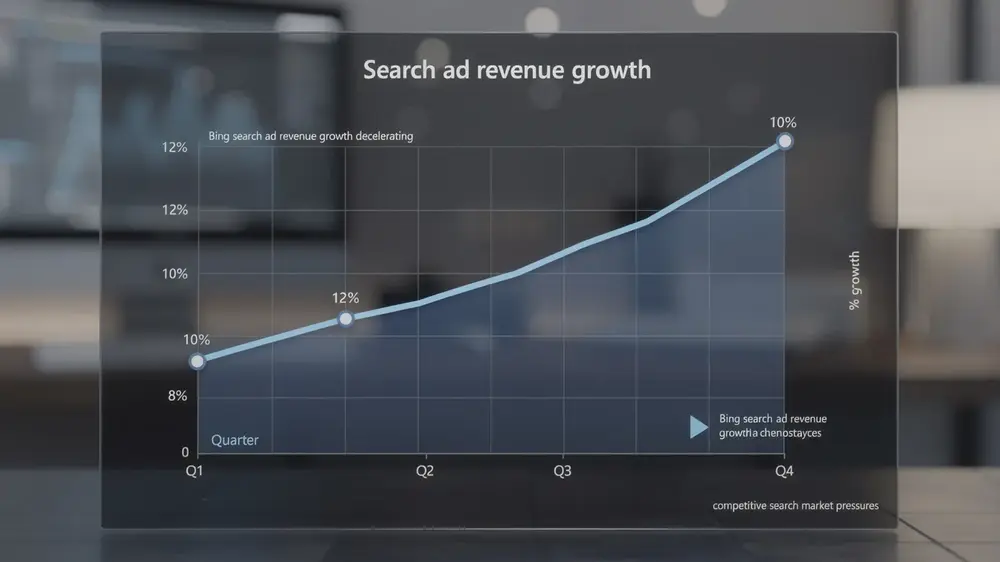
Microsoft’s search advertising revenue grew 10% year-over-year in Q4 FY26, excluding traffic acquisition costs, marking a continued deceleration from the 12% growth recorded in Q3 and the stronger rates seen in earlier periods. The figure lands against a broader company quarter that hit $90 billion in total revenue, with Bing remaining one of the few growth contributors inside a More Personal Computing division that saw declines in Windows OEM and Xbox.
- Bing search ad revenue grew 10% year-over-year in Q4 FY26 (9% in constant currency), down from 12% in Q3 FY26 and sharper growth rates in earlier quarters.
- Search is currently the primary stabilizing force inside Microsoft’s More Personal Computing division, which posted a 4% overall revenue decline for the quarter.
- Microsoft 365 Copilot crossed 30 million paid seats and Azure surpassed $100 billion in revenue, signaling continued AI infrastructure investment that underpins Bing and related search tools.
- Copilot integration into search may be reshaping click-through behavior on organic results, making AI-oriented content optimization a present concern for publishers and SEO teams.
- Whether the 10% growth rate represents a temporary plateau or a longer trend will become clearer in the next earnings cycle, making quarterly monitoring of Microsoft’s search disclosures more important than usual.
Microsoft Search Advertising Growth Slows to 10% in Q4 2026
Microsoft’s search advertising revenue, excluding traffic acquisition costs, grew 10% year-over-year in its fiscal fourth quarter of 2026, according to the company’s earnings release. That figure represents a deceleration from the 12% growth recorded in Q3 FY26, and a sharper pullback from the 16% and 21% rates seen in earlier periods. In constant currency terms, growth came in at 9%.
The slowdown is worth watching for anyone tracking Bing’s competitive position. Search advertising remains the primary growth driver within Microsoft’s More Personal Computing division, which posted total revenue of $12.9 billion for the quarter. That overall divisional figure was down 4% year-over-year, dragged lower by a 7% decline in Windows OEM revenue and a 10% drop in Xbox. Search, in other words, is holding the division together even as other segments contract.
For advertisers and SEO professionals, the deceleration raises a practical question about whether Bing’s AI-powered search features are translating into sustained commercial momentum or simply stabilizing at a slower growth trajectory. The 10% rate matches what Microsoft reported in earlier quarters this fiscal year, suggesting the pace may be settling rather than collapsing. Whether that floor holds in the next quarter will depend partly on how Microsoft continues to develop its AI search integrations and whether advertiser adoption keeps pace.
Microsoft Q4 FY26 Financial Results: Revenue, Earnings, and Key Milestones
Microsoft reported total company revenue of $90 billion for Q4 FY26, representing 18% year-over-year growth (17% in constant currency). Operating income reached $40.6 billion, also up 18%, while GAAP net income climbed to $35.8 billion, a 31% increase. Non-GAAP net income came in at $35.3 billion, up 22%, with the difference reflecting the impact of OpenAI-related investments excluded from that figure.
Diluted earnings per share hit $4.81 on a GAAP basis (up 32%) and $4.74 on a non-GAAP basis (up 23%). The company beat analyst expectations on both revenue and earnings, and Microsoft stock rose over 7% in after-hours trading following the release. That said, the stock remains down more than 17% year-to-date, so the after-hours move should be read in that broader context.
CEO Satya Nadella highlighted two headline figures: Azure revenue surpassed $100 billion for the first time, and Microsoft 365 Copilot crossed 30 million paid seats. For SEO professionals and publishers tracking Microsoft’s search and AI ecosystem, Azure growth matters because it funds the infrastructure behind Bing, Copilot, and related tools. Those interested in how Microsoft surfaces content through its search products can explore Bing Webmaster Tools and its role in search visibility as a practical starting point.
Impact on Search Marketers and SEO Teams
Bing’s 10% revenue growth is a positive signal, but the slower pace compared to recent quarters gives search marketers reason to recalibrate expectations. For teams managing non-Google visibility, the headline figure confirms that Microsoft’s search ecosystem remains functional and monetizable, even as the broader PC hardware division faces pressure.
Publishers and affiliate sites drawing referral traffic from Bing should watch how Microsoft’s deeper integration of Copilot into search changes user behavior. AI-assisted answers can reduce click-through rates on organic results, which means optimizing content for AI-driven search experiences is becoming a practical concern rather than a future consideration.
Brands targeting enterprise or B2B audiences deserve particular attention here. Microsoft’s ecosystem carries more weight in those segments than in general consumer markets, so shifts in how search ads perform alongside AI investments could have a measurable effect on pipeline-focused campaigns.
For budget planning, the deceleration in growth rate suggests tougher year-over-year comparisons are likely ahead. Advertisers who set targets based on Bing’s stronger growth periods from previous quarters may need to build in more conservative assumptions. The core takeaway is that Bing remains a stable channel, but the conditions shaping its performance are shifting in ways that reward closer monitoring rather than a set-and-forget approach.
When a channel that was growing at 21% settles toward 10%, the instinct is often to reallocate budget immediately. From an editorial perspective, the more useful response is to separate the revenue growth rate from actual efficiency metrics, since a slower-growing channel can still deliver strong returns if cost-per-acquisition holds steady. The risk is treating deceleration and deterioration as the same signal when they are not. (Hyogi Park, MOCOBIN)
Recommended Actions for Search Professionals
The current slowdown in Bing’s growth rate calls for measured analysis rather than immediate budget shifts. Treating the 10% growth figure as a planning baseline gives teams the time needed to determine whether this represents a temporary plateau or a more persistent trend before making structural changes to campaign allocation.
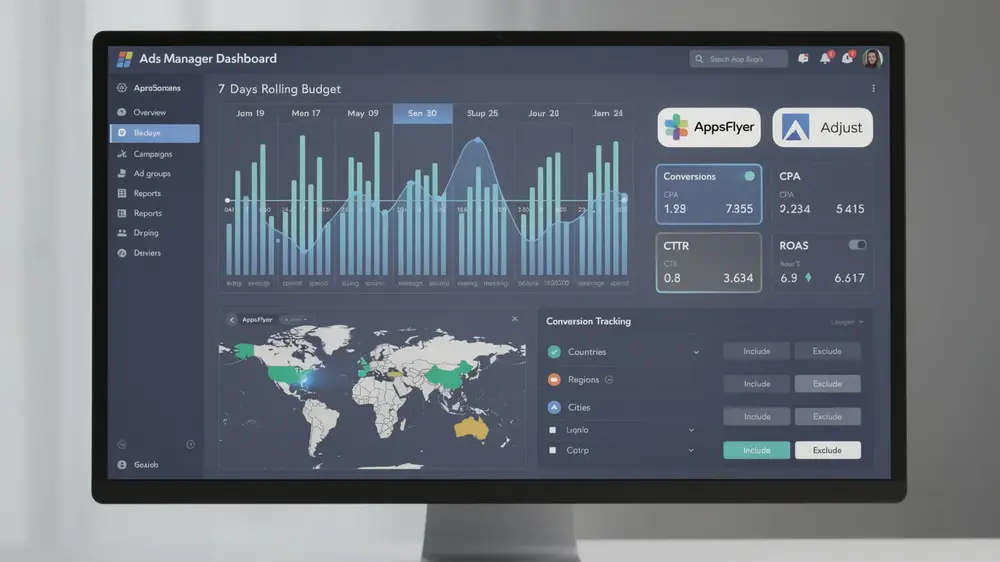
On the paid side, reviewing cost-per-acquisition and return on ad spend for Microsoft Ads campaigns relative to Google benchmarks is a practical starting point. If efficiency metrics remain strong, the case for maintaining current investment levels holds even as volume growth moderates.
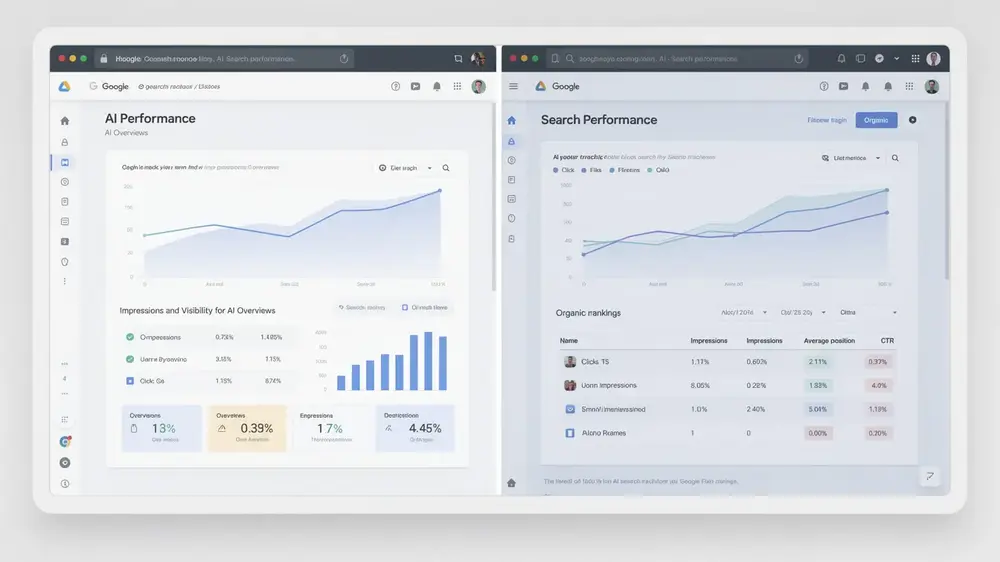
For organic and demand generation efforts, auditing the branded versus non-branded query mix in Bing Webmaster Tools helps clarify whether audience interest is genuinely growing or simply reflecting existing brand recognition. Understanding the difference between organic and paid search performance becomes especially relevant here, since Copilot integration may be reshaping how clicks and impressions are distributed across both channels.
Landing page performance deserves specific attention for Microsoft search traffic. Copilot-influenced search behaviors can alter user intent signals, which may affect conversion rates in ways that standard Google-centric analysis would miss.
- Track Copilot and Bing feature updates that could affect ad placement or click patterns.
- Segment landing page analytics by traffic source to isolate Microsoft search behavior.
- Revisit branded query share monthly to detect early shifts in demand momentum.
Key Indicators to Monitor in Coming Quarters
The most immediate signal to watch is whether Microsoft’s search advertising growth rebounds toward the 12% rate seen in stronger periods, or whether the deceleration visible in recent earnings continues. That single figure will clarify whether the current softness is a temporary adjustment or a structural shift in Bing’s advertising momentum.
Beyond the headline growth rate, several specific disclosures deserve close attention:
- Copilot and AI search metrics: Microsoft has not yet broken out Copilot usage figures or AI-driven search adoption rates as separate line items. Any move toward greater transparency here would help advertisers and publishers assess how AI features are actually contributing to monetization.
- Advertiser demand commentary: Executive remarks on traffic quality, advertiser demand trends, and competitive dynamics in search advertising often signal directional changes before they appear in the numbers.
- More Personal Computing segment health: Search revenue has been partially offsetting declines in Windows OEM and Xbox. If that offset weakens, the segment faces compounding pressure.
- Bing distribution and interface changes: Any shifts in search distribution partnerships or user interface modifications could affect click-through rates and organic traffic patterns in ways that matter directly to SEO practitioners.
For those building or adjusting search strategies around AI-integrated results, tracking these signals alongside AI visibility strategies for evolving search environments provides a more complete picture of where organic and paid performance may be heading.