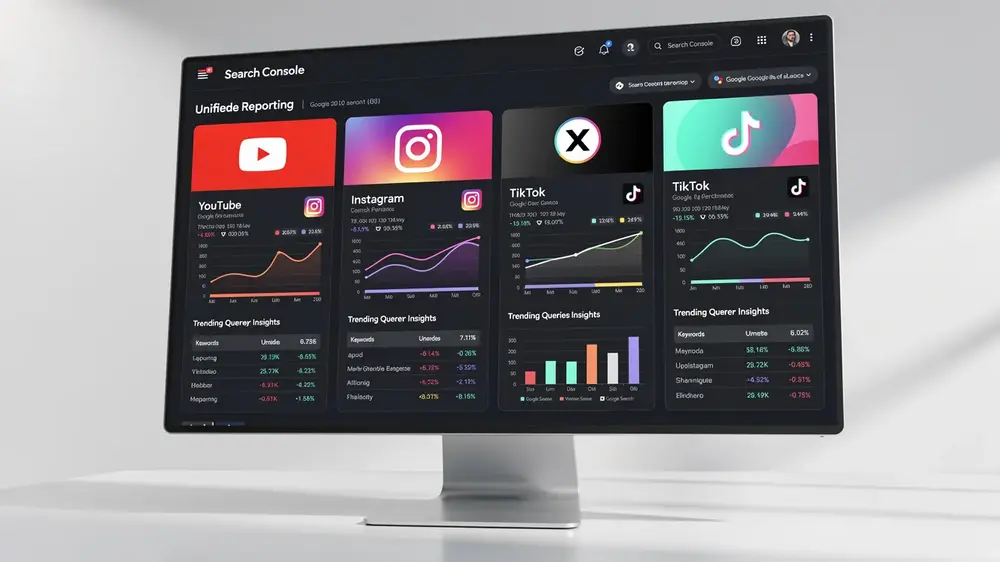
Google has expanded platform properties in Search Console to all users globally, giving creators and publishers a direct way to track how their content on YouTube, Instagram, X, and TikTok performs in Google Search. The rollout follows an earlier limited introduction and marks the first time Search Console has formally extended its reporting scope beyond owned websites to include third-party social and video platforms.
- Platform properties are now available to all Search Console users worldwide, covering YouTube, Instagram, X, and TikTok.
- The Insights report surfaces top, trending up, and trending down search queries driving traffic to social and video content, including a 24-hour filter for spotting sudden spikes.
- Performance data from multiple platforms can be exported into a single spreadsheet, removing the need to switch between separate dashboards.
- SEO teams and social media marketers can use query themes from the reports to inform content planning, metadata decisions, and platform prioritization.
- Potential additions of more platforms and deeper engagement metrics will determine whether this becomes a core reporting tool or remains supplementary.
Google Launches Global Access to Platform Properties in Search Console
Google has made platform properties available to all Search Console users worldwide, expanding a feature that was introduced earlier this month. The rollout gives content creators and publishers a direct way to monitor how their off-site content performs in Google Search, covering third-party platforms including YouTube, Instagram, X, and TikTok.
Adding a platform property is straightforward. Users select the option from the Search Console menu bar, and performance data for their social and video content becomes immediately accessible. This means creators can now see which search queries are driving traffic to their content on these platforms, something that was not previously available through Google’s native analytics tools.
For SEO professionals and publishers, this is a meaningful shift. Search Console has traditionally focused on owned websites, so extending its scope to social and video platforms opens a new layer of search visibility data. Understanding how content on TikTok or YouTube surfaces in Google Search results, and which queries trigger those appearances, can inform both content strategy and platform prioritization.
If you are new to the tool or want a clearer picture of what it tracks, the Google Search Console fundamentals guide covers the core features and how to interpret performance reports. The addition of platform properties makes that foundation even more relevant for creators working across multiple channels.
Core Features and Data Available Through Platform Properties
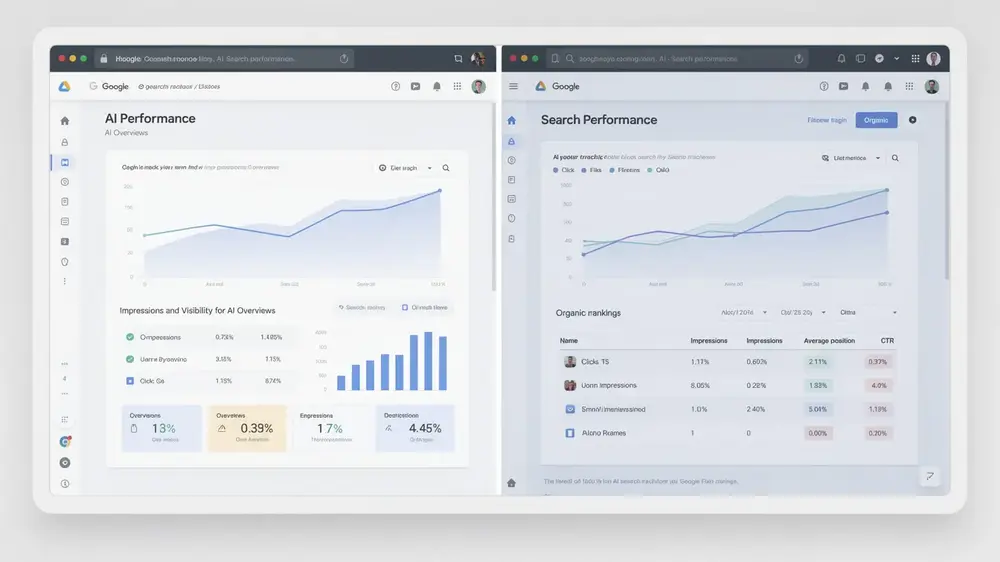
The centerpiece of Google’s platform properties feature is an Insights report that surfaces top, trending up, and trending down query groups driving traffic from Google Search to social and video content. A 24-hour filter lets users spot sudden traffic spikes to recent posts, which is useful for making timely content promotion decisions before a trend fades.
Performance data can be exported from multiple properties into a single spreadsheet, allowing direct side-by-side comparison across YouTube, Instagram, X, and TikTok. That consolidated view removes the friction of switching between separate dashboards when evaluating cross-platform search visibility.
Search Console annotations add another practical layer. By marking the date of an external change, such as rewriting a YouTube title or updating a TikTok caption, site and channel owners can measure whether that edit produced a measurable shift in search performance over time. This connects well with broader on-page SEO optimization principles, where small copy changes can carry meaningful ranking implications.
Page filters and comparison mode extend the analysis further, enabling evaluation of video playlists and direct contrasts between short-form and full-length video search traffic. Google has also published a new help document covering how to apply this data for audience analysis and content optimization, giving practitioners a structured starting point for working with the new tools.
Impact on Creators, SEO Teams, and Social Media Marketers
The practical benefits of this update spread across several distinct groups, each gaining something specific rather than a generic data boost. YouTube and Instagram channel owners, along with creators on X and TikTok, are the most direct beneficiaries, since they can now see which search queries are actually driving traffic to their social content through Google Search Console.
For SEO teams, the value lies in connecting off-site content performance to broader search strategy. Social posts and videos have always contributed to a brand’s search presence in some form, but that contribution was largely invisible in standard reporting. This update closes that gap by surfacing search query themes tied to social content, making it easier to build a cohesive SEO content strategy that spans both owned websites and third-party platforms.
Social media marketers gain something equally concrete: data to refine what they publish and when. Knowing which topics resonate in search results, rather than relying solely on engagement metrics, shifts content planning from guesswork toward evidence.
- Creators and channel owners gain search performance visibility for social content
- SEO teams can link off-site content to overall search presence
- Social media marketers access query themes to sharpen targeting
- Publishers and media brands can identify which topics attract search-driven audiences
Publishers leveraging social content for audience growth stand to benefit as well, particularly when identifying topic gaps or doubling down on subjects that already perform well in search.
Recommended Actions for Content Teams and Publishers
The most immediate step is straightforward: add any eligible platform properties in Search Console and verify access. Without verified properties, none of the new reporting features will collect data, so teams that delay setup are simply losing time they cannot recover later.
Once access is confirmed, the Insights report becomes a practical starting point. It surfaces which search terms are driving traffic to social and video content, giving content teams a clearer picture of actual audience intent rather than assumptions. The 24-hour view adds a real-time layer, making it easier to spot content that is gaining sudden traction from search and act on that momentum through cross-promotion.
For teams managing content across multiple platforms, exporting the combined data allows direct performance comparisons between platforms and content formats. Annotations are worth using consistently here. Logging changes such as title edits or caption rewrites against the performance timeline creates measurable feedback on whether those adjustments improved search visibility.
The longer-term opportunity is in content planning. Query themes identified in the reports can directly inform metadata decisions for social and video assets, including captions, hashtag strategies, and video topic selection. This kind of search-informed optimization for AI and traditional search moves content strategy from intuition toward evidence, which is especially valuable as search behavior continues to shift across platforms.
- Verify all eligible platform properties in Search Console before expecting data
- Use the Insights report to identify high-performing search queries for social and video
- Monitor the 24-hour view for content gaining sudden search traction
- Export multi-platform data to compare format and channel performance
- Apply annotations when making title, caption, or metadata changes
- Feed query themes back into planning for future video topics and hashtag choices
Future Developments and Monitoring Points
Several signals are worth tracking as Google’s platform properties feature continues to mature. The current supported list covers YouTube, Instagram, X, and TikTok, but expansion to additional platforms could meaningfully broaden the feature’s practical utility for creators and publishers operating across a wider range of channels.
On the analytics side, the introduction of deeper engagement metrics and conversion tracking would push the feature well beyond basic traffic data. Right now, the analytical value is relatively limited, and how Google responds to that gap will shape whether site owners treat this as a core reporting tool or a secondary one.
User feedback on data quality and the property claiming process will be a reliable early indicator of whether the feature genuinely meets creator needs. If friction in the claiming workflow remains high, adoption may stay narrow despite the feature’s potential.
Publishers should also watch how peers begin using platform properties to identify search opportunities and refine social content strategies. Early adopters will likely surface best practices that clarify practical use cases. For those thinking about how structured data fits into this broader measurement picture, understanding how schema markup supports search visibility provides useful context for connecting on-site signals with off-site platform data.
Follow-up examples from Google demonstrating integration with broader analytics tools and workflows would confirm whether this feature can slot into existing measurement stacks or requires separate handling.
The current platform properties feature is a promising first step, but the analytical depth is still limited. Teams should treat early data as directional rather than definitive, and watch closely for how Google expands both platform coverage and metric depth before restructuring reporting workflows around it. — Hyogi Park, MOCOBIN