
Author name: Martha.V

Martha Vicher Author Bio Martha Vicher is a core member of MOCOBIN Media, focusing on content planning, digital marketing communication, and global content direction. Originally from the United Kingdom, she studied Media Communications and has developed practical experience in advertising and digital marketing environments, including work related to web marketing, brand messaging, and online audience communication. At MOCOBIN, she contributes to global content planning, editorial direction, brand communication, and content review for international audiences. Her role helps MOCOBIN present its Korean and Japanese market expertise in a clearer and more accessible way for global readers and businesses. She supports the platform’s goal of connecting Asian market knowledge with practical digital growth strategies. Note: Before publishing, please confirm that all education and career details match Martha Vicher’s actual background.

Competitor Keyword Analysis: Boost Your SEO Strategy

Competitor Keyword Analysis: Find Keyword Gaps and SEO Opportunities

Competitor keyword analysis is one of the most practical ways to improve an SEO strategy without guessing what to publish next. Instead of choosing topics by instinct, you compare the keywords competing pages already rank for with your own visibility, then identify where your content is missing, weak, outdated, or misaligned with search intent. The […]

Competitor Keyword Analysis: Find Keyword Gaps and SEO Opportunities Read More »

What Are LSI Keywords and Their Importance in SEO

LSI Keywords in SEO: Myth, Meaning, and Better Alternatives

LSI keywords is an SEO term that still appears in blog posts, freelance briefs, and content checklists, even though it does not describe how modern search systems should be understood. Technically, LSI stands for Latent Semantic Indexing, an older information retrieval method. In SEO conversations, however, people usually use the phrase to mean related terms,

LSI Keywords in SEO: Myth, Meaning, and Better Alternatives Read More »

Best Free Keyword Research Tools for Effective SEO

Best Free Keyword Research Tools for SEO: Compare Free Options, Use Cases, and Limits

Free keyword research tools can support a reliable SEO workflow when you know what each tool is actually showing. Google Search Console is useful for finding queries where your site already has visibility, Google Trends helps you understand seasonality and rising interest, Google Autocomplete reveals natural long-tail phrasing, and Google Keyword Planner can provide broad

Best Free Keyword Research Tools for SEO: Compare Free Options, Use Cases, and Limits Read More »

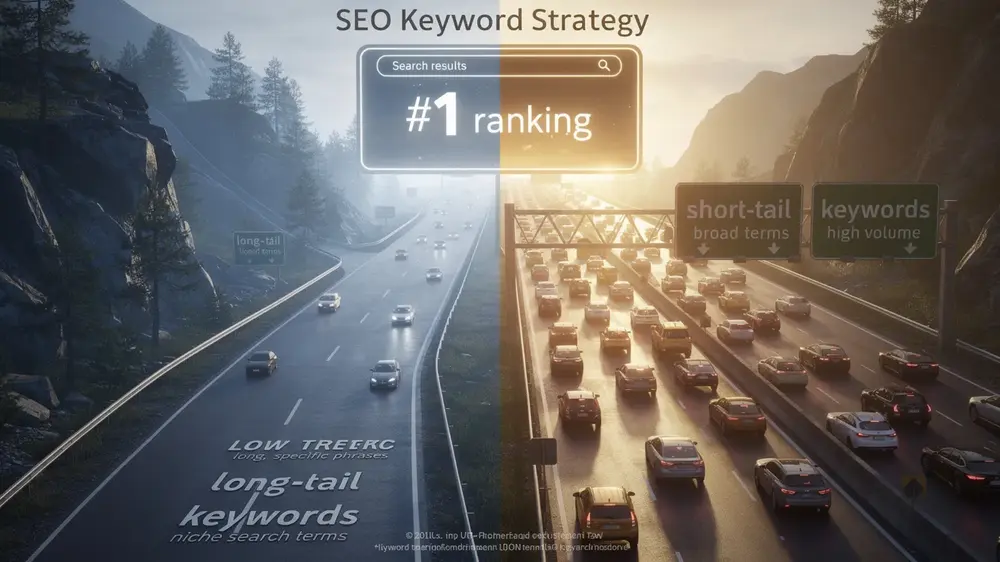
Long-Tail vs Short-Tail Keywords: Key Differences Explained

Long-Tail vs Short-Tail Keywords: Differences, Examples, and SEO Strategy

Long-tail and short-tail keywords describe two different types of search queries. Short-tail keywords are broad, usually one or two words, and often have high search volume and high competition. Long-tail keywords are more specific, usually three or more words, and often show clearer search intent even when each phrase has lower search volume. The difference

Long-Tail vs Short-Tail Keywords: Differences, Examples, and SEO Strategy Read More »

How to Do Keyword Research for Effective SEO Strategies

How to Do Keyword Research for SEO: A Practical Step-by-Step Guide

Keyword research is the process of finding, evaluating, and organizing the search terms people use when looking for information, products, or services. A strong keyword research process does more than collect search volume. It helps you understand user intent, choose realistic ranking opportunities, and decide which topics deserve new pages, updates, FAQs, or supporting content.

How to Do Keyword Research for SEO: A Practical Step-by-Step Guide Read More »

How to Fix 404 Errors and Improve Your Website's SEO

How to Fix 404 Errors for SEO: Search Console, Redirects, and Best Practices

A 404 error appears when a URL cannot be found on the server. In SEO, the goal is not to remove every 404 from the internet. The goal is to identify which missing URLs matter, fix broken internal paths, redirect valuable removed pages to relevant alternatives, and leave genuinely outdated or intentionally removed URLs as

How to Fix 404 Errors for SEO: Search Console, Redirects, and Best Practices Read More »

Schema Markup and Rich Snippets: Boost Your SEO Strategy

Schema Markup and Rich Snippets: Structured Data SEO Guide

Schema markup is structured data added to a webpage to help search engines understand what the page represents, not just what the visible text says. Rich snippets, more accurately called rich results in Google documentation, are enhanced search listings that may appear when structured data is valid, visible content matches the markup, and the page

Schema Markup and Rich Snippets: Structured Data SEO Guide Read More »

What Are Canonical Tags and Their Importance in SEO

Canonical Tags in SEO: A Practical Guide to Duplicate URLs, Parameters, and Indexing

Canonical tags are easy to add, but they are also easy to misuse. In many technical SEO audits, the issue is not simply that a page is missing a rel=”canonical” tag. The bigger problem is usually that the canonical tag, internal links, XML sitemap, redirects, and hreflang annotations are all sending different signals. A canonical

Canonical Tags in SEO: A Practical Guide to Duplicate URLs, Parameters, and Indexing Read More »

How to Create XML Sitemap for Effective SEO

How to Create an XML Sitemap for SEO: Setup, Submission, and Common Mistakes

An XML sitemap is a file that lists the important URLs on a website so search engines can discover, crawl, and understand them more efficiently. It does not guarantee indexing, but it gives search engines a clearer roadmap of the pages you want them to consider. For SEO, a sitemap is most useful when it

How to Create an XML Sitemap for SEO: Setup, Submission, and Common Mistakes Read More »

SEO Basics: Understanding Key Strategies for Success

SEO Basics: How Search Works, Key Steps, and Common Mistakes

SEO, or Search Engine Optimization, is the practice of helping search engines understand your website and helping users find the right page when they search. It combines technical accessibility, useful content, and trust signals so pages can be discovered, indexed, and ranked for relevant queries. For beginners, SEO can feel broad because it includes website

SEO Basics: How Search Works, Key Steps, and Common Mistakes Read More »

Website Speed Optimization for SEO: Boost Your Rankings

Website Speed Optimization for SEO: Core Web Vitals and Practical Fixes

Website speed optimization for SEO means improving how quickly a page loads, responds to user actions, and remains visually stable while visitors use it. Speed matters because slow pages frustrate users, reduce engagement, and can weaken page experience signals that Google’s ranking systems consider alongside relevance, content quality, and authority. Fast pages do not automatically

Website Speed Optimization for SEO: Core Web Vitals and Practical Fixes Read More »

What is Technical SEO and Why It Matters for Your Website

What Is Technical SEO? Crawlability, Indexing, Core Web Vitals, and Site Health

Technical SEO is the process of making a website easier for search engines to crawl, render, index, and understand. It focuses on the technical systems behind search visibility, including robots.txt, XML sitemaps, canonical tags, redirects, mobile rendering, structured data, HTTPS, Core Web Vitals, internal linking, and duplicate content control. Good technical SEO does not replace

What Is Technical SEO? Crawlability, Indexing, Core Web Vitals, and Site Health Read More »

Digital PR for Link Building: Boost Your SEO Strategy

Digital PR Link Building: Earn Authority Backlinks with Media Outreach

Digital PR for link building is the process of earning editorial backlinks by creating stories, data, expert commentary, or useful resources that journalists, bloggers, and industry publishers want to reference. Unlike low-quality guest posting, link exchanges, or paid placements disguised as editorial coverage, Digital PR focuses on building visibility through credible media mentions and naturally

Digital PR Link Building: Earn Authority Backlinks with Media Outreach Read More »

Broken Link Building Strategy: Boost Your SEO Effectively

Broken Link Building Strategy: How to Earn Quality Backlinks Safely

Broken link building is an outreach-based SEO strategy where you find dead links on relevant websites, create or identify a useful replacement resource, and suggest that resource to the site owner as a fix. When it is done carefully, the method helps publishers improve user experience while giving your site a fair chance to earn

Broken Link Building Strategy: How to Earn Quality Backlinks Safely Read More »

Understanding Domain Authority vs Page Authority in SEO

Domain Authority vs Page Authority: What They Mean in SEO

Domain Authority (DA) and Page Authority (PA) are third-party SEO metrics, most commonly associated with Moz, that estimate how likely a domain or individual page may be to rank in search results. They are useful for competitor research, link evaluation, and content prioritization, but they are not official Google ranking factors and should not be

Domain Authority vs Page Authority: What They Mean in SEO Read More »

Guest Posting for SEO: Boost Your Online Visibility

Guest Posting for SEO: Safe Link Building and Outreach Guide

Guest posting for SEO is the practice of contributing useful articles to relevant external websites in order to build authority, reach a new audience, and sometimes earn an editorial backlink. It can support search visibility when the content is genuinely helpful, topically relevant, and published on a site with real editorial standards. It becomes risky

Guest Posting for SEO: Safe Link Building and Outreach Guide Read More »

Scroll to Top