
Topic clusters organise related pages around a broad central resource, often called a pillar page. The supporting pages answer narrower questions and connect through internal links where those links help the reader. Used well, this model can make a growing content library easier to plan, navigate, and maintain.
A topic cluster is not an official Google ranking framework and it is not a shortcut to higher positions. Google’s guidance focuses on useful content, logical site organisation, crawlable links, and descriptive anchor text. The practical value of a cluster therefore comes from giving each page a clear role and connecting related information in a way that makes sense for users.
- A topic cluster connects a broad pillar page with focused supporting pages that serve distinct search intents or questions.
- There is no useful fixed number of cluster pages. Build only the pages that have a clear purpose, distinct intent, and enough value to justify separate URLs.
- Internal links should be descriptive and contextual. A cluster does not require every supporting page to link to every other page.
- Topic clusters and content silos are related ideas, but strict isolation between silos is unnecessary when a cross-topic link genuinely helps the reader.
- Existing content should be audited before new pages are created, especially when several URLs already cover similar queries.
What Are Topic Clusters, Pillar Pages and Content Silos?
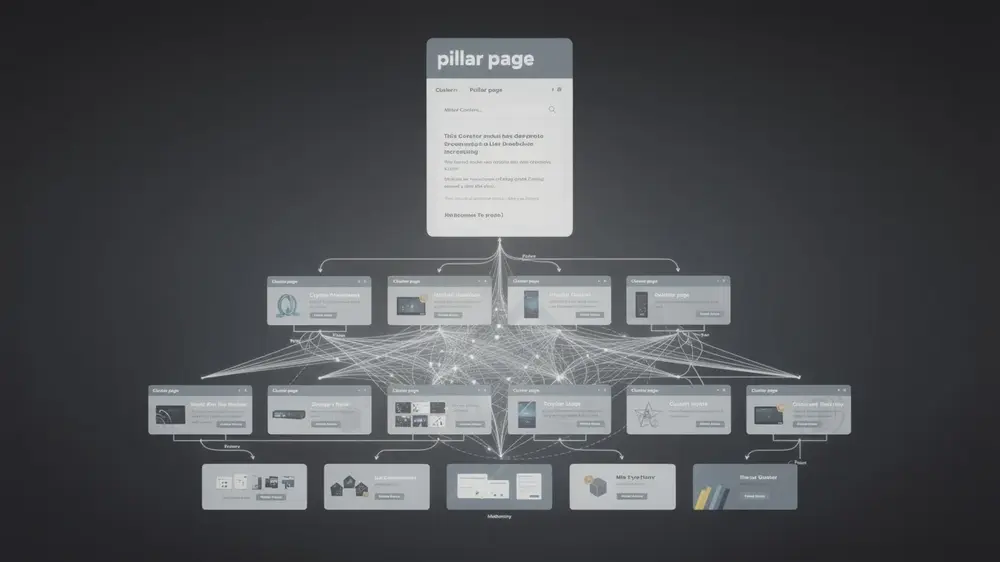
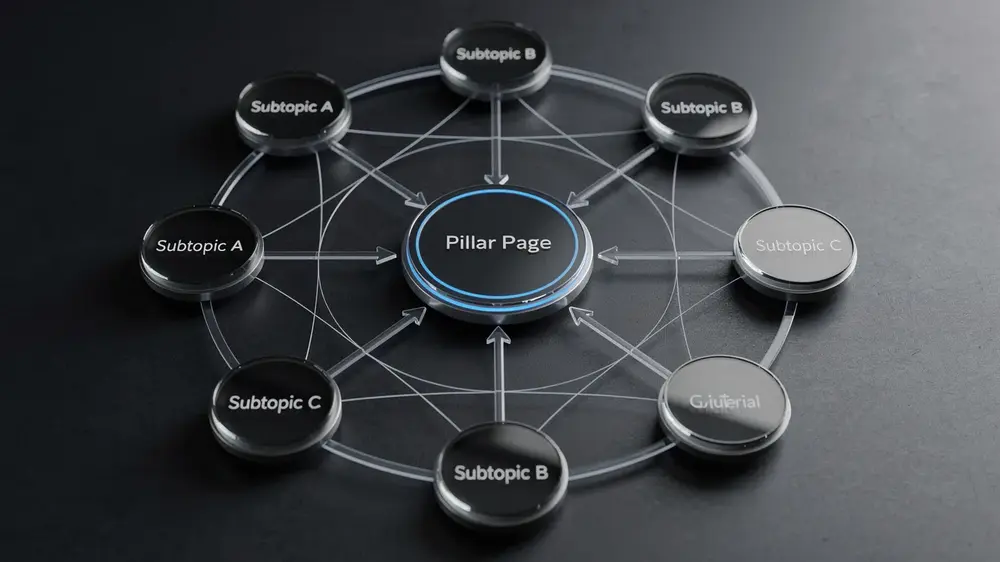
A topic cluster is a group of related pages organised around a central subject. The pillar page gives readers a broad overview, while supporting pages go deeper into specific questions, tasks, comparisons, or subtopics. Internal links connect those pages where the relationship is useful.
For example, a broad guide to SEO basics might introduce keyword research, on-page SEO, technical SEO, internal linking, structured data, and content planning. Separate supporting pages can then explain each subject in greater depth. The broad page does not need to reproduce every detail, and the supporting pages should not simply repeat the pillar.
A content silo is a wider site-organisation concept. It groups related content into recognisable subject areas, which may be reflected through navigation, categories, directories, breadcrumbs, or internal links. A silo does not need to become a closed section of the site. If a page in another topic area helps the reader complete the task, a contextual cross-link can still be appropriate.
For a site developing a wider SEO strategy, the useful question is not whether every subject needs a formal cluster. It is whether related pages have clear roles and whether readers can move from a broad explanation to the detail they need without encountering unnecessary duplication.
Main Parts of a Topic Cluster
- Pillar page: A broad resource that introduces the main subject and points readers towards deeper material.
- Supporting pages: Pages with distinct purposes, such as explaining a subtopic, answering a narrower question, or serving a different stage of the user journey.
- Internal links: Contextual links that help users and crawlers discover related pages.
- Descriptive anchor text: Link text that sets a clear expectation about the destination without forcing exact-match keywords.
Why Topic Clusters Matter for SEO
Topic clusters are useful because they address a common site-architecture problem: related articles accumulate over time without a clear relationship between them. A site can contain strong individual pages and still make it difficult for readers to identify the main resource, discover follow-up information, or understand which page answers which question.
Google’s SEO Starter Guide recommends organising a site logically so users and search engines can understand how pages relate to the rest of the site. It also explains that Google discovers many pages through links. This supports the practical case for a clear internal structure, but it does not mean Google requires a pillar-cluster model or assigns a public score to sites that use one.
The strongest reason to build a cluster is therefore operational clarity. A broad page can introduce the subject, while supporting pages handle questions that deserve their own depth or intent. This creates a cleaner learning path and can make content maintenance easier because each URL has a defined job.
Structure cannot compensate for weak content. Thin supporting pages, near-duplicate articles, forced links, and pages created only to target small keyword variations can make a cluster harder to use. Google’s people-first guidance also warns against producing large amounts of search-focused content without enough original value. A cluster should reduce unnecessary pages, not provide a reason to manufacture more of them.
How to Build a Topic Cluster Strategy
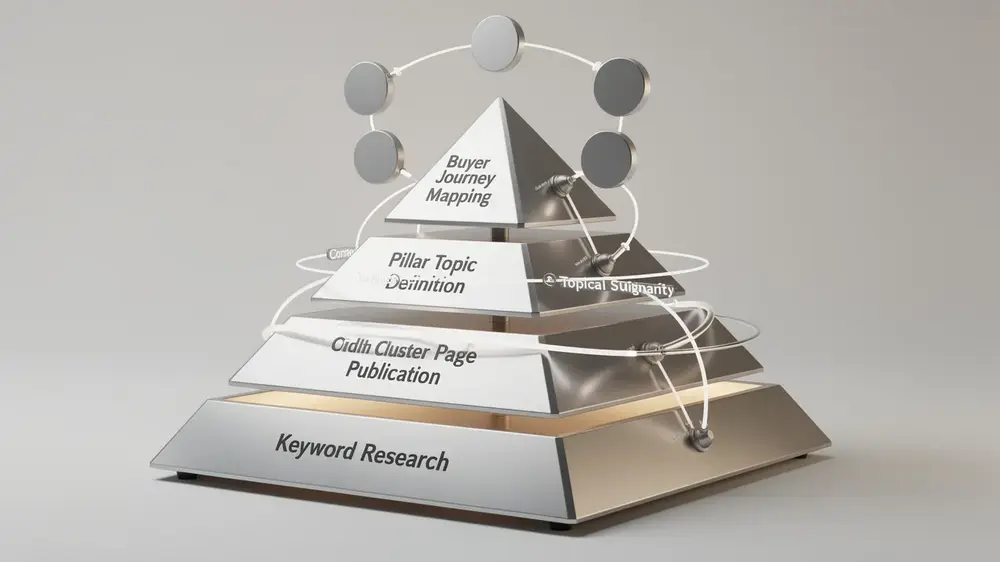
The best starting point is an inventory, not a publishing target. Review the pages you already have, identify the main subject each one serves, and note where several URLs appear to answer the same question. This gives you a clearer view of what should become a pillar, what should remain a supporting page, and what may need consolidation.
Step 1: Choose a Pillar Topic with Real Depth
A pillar topic should be broad enough to support several meaningful subtopics but focused enough to give the page a clear purpose. “SEO” may be too broad for one practical guide on a small site, while “technical SEO basics” or “SEO for small business websites” gives the page a more manageable scope.
Use keyword research, Search Console data, customer or reader questions, competitor review, and existing site performance to understand how people break the subject into separate needs. The goal is not to turn every keyword group into a URL. It is to identify which questions belong together and which genuinely need separate pages.
Step 2: Map Supporting Pages by Intent
There is no universal cluster size. A narrow subject may need only a few supporting pages, while a larger subject may justify a deeper hub. The decision should come from search intent, audience needs, topic depth, existing content, and the team’s ability to maintain the pages.
Before approving a supporting page, ask whether it has a distinct job. If the proposed page would repeat the same answer, examples, and next step as an existing URL, strengthening or consolidating the existing page is usually cleaner than creating another near-duplicate.
Step 3: Choose a Publishing Sequence Based on What Already Exists
If the site already contains several related articles, creating or updating the pillar first can provide a useful hub and reveal where existing pages overlap. If the topic is new, it can be reasonable to publish one or two well-scoped supporting pages before expanding the hub, especially when the team still needs to learn which questions deserve deeper coverage.
The sequence itself is not a ranking tactic. Choose the order that gives readers useful pages sooner and gives the editorial team the clearest structure to maintain.
Step 4: Build Internal Links That Help the Reader
The pillar page should link to important supporting pages when readers need more detail. Supporting pages can link back to the pillar when broader context is useful, and they can link to sibling pages where there is a genuine next step.
Google’s link best-practices guidance says internal links help people and Google make sense of a site, and recommends descriptive, concise, relevant anchor text. A sound internal linking structure should follow that principle rather than forcing every cluster page into a rigid link pattern.
Step 5: Maintain the Cluster as One Content System
Review a cluster when search demand changes, new pages are proposed, existing pages begin to overlap, or important URLs lose relevance. Maintenance can involve updating a pillar, strengthening a supporting page, changing internal links, consolidating two similar pages, or deciding that no new page is needed.
Search Console can help identify query patterns and pages that are already receiving impressions, but performance data should be interpreted alongside intent and content quality. A page receiving impressions is not, by itself, proof that the cluster needs another supporting URL.
Common Topic Cluster Mistakes to Avoid
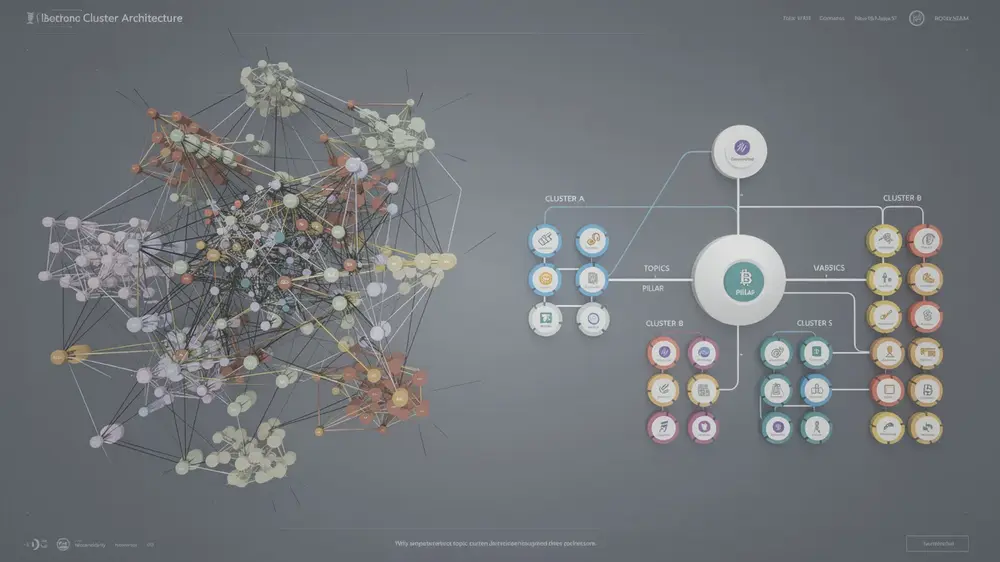
The main failure point is treating the diagram as the strategy. A neat hub-and-spoke structure can still produce a poor user experience if the pages overlap, the links are forced, or the topics do not reflect real reader needs.
Mistake 1: Forcing Too Many Cluster Pages
Do not set a minimum page count. A cluster is complete when the important user needs are covered at the right level of detail, not when a spreadsheet reaches a target number. If several proposed pages would answer essentially the same intent, combine the material before publication.
Mistake 2: Building Silos Before Reviewing Demand and Existing Content
Categories, folders, and visual maps can make a site look organised while hiding weak content decisions. Review search intent, audience questions, current URLs, and business relevance before changing the architecture. The content model should follow the reader’s needs rather than the other way round.
Mistake 3: Treating Every Cross-Topic Link as Harmful
Strict silo rules can become counterproductive when they stop a useful contextual link. Keep the main subject of the page clear, but link outside the immediate cluster when another resource genuinely helps the reader understand a dependency, complete a task, or move to the next relevant question.
Mistake 4: Using Structure to Hide Weak Content
A pillar cannot rescue supporting pages that are outdated, shallow, duplicated, or written only to capture keyword variations. Review each page on its own merits as well as its role in the cluster. If a page does not add a distinct answer or useful depth, the better action may be to merge it rather than keep it for structural symmetry.

How to Optimise and Maintain Topic Clusters
Once a cluster is live, manage it as a set of related pages rather than a collection of independent posts. The useful maintenance question is whether each URL still has a clear purpose and whether the links still reflect the way readers move through the subject.
Topic Cluster Maintenance Checklist
- Review query patterns: Use Search Console to find missing questions, changing terminology, or pages appearing for the same intent.
- Check internal links: Confirm that important pages are discoverable and that anchors still describe the destination accurately.
- Review overlap: Compare pages that target similar queries and consolidate them when their useful outcome is substantially the same.
- Update time-sensitive details: Replace outdated screenshots, tool features, product names, policies, examples, or statistics where relevant.
- Strengthen weak pages selectively: Add missing explanation when it helps the reader, not simply to make the page longer.
- Approve new pages carefully: Create another URL only when the subtopic has a distinct intent, enough depth, and a clear role in the wider cluster.
Topic clusters work best as part of a broader SEO content strategy. They are a planning and navigation model, not a ranking formula. If the cluster makes page purpose clearer, reduces overlap, and helps readers find the next useful resource, the structure is doing its job.