SEO Writing Guide: Create Content That Ranks and Helps Readers
Introduction to SEO Writing
SEO writing is the process of planning, writing, and improving content so search engines can understand it and readers can use it. Good SEO writing starts before the first sentence is drafted. It begins with search intent, SERP review, keyword research, page structure, and a clear understanding of what the reader should be able to do after reading the page.
In 2026, SEO writing is not about repeating keywords, chasing a fixed word count, or copying the structure of every top-ranking page. It is about creating people-first content that answers the query clearly, shows practical understanding, uses reliable information, and gives readers a reason to trust the page. For a broader foundation, you can start with our SEO basics guide before using this article as a writing workflow.
What Is SEO Writing and Why It Matters
SEO writing means creating content that matches a real search query while still being useful, readable, and credible for the person behind that query. The writer needs to balance two goals: helping search engines understand the topic and helping readers solve a problem, compare options, learn a concept, or make a decision.
- Search visibility: The page should use clear language, relevant keywords, structured headings, and metadata so search engines can understand the topic.
- Reader value: The content should answer the query better than a generic summary by adding examples, context, original explanation, and practical next steps.
SEO writing matters because organic search is often one of the most sustainable ways for a website to attract qualified visitors. However, ranking alone is not enough. A page that earns clicks but fails to satisfy readers will not support long-term trust, conversions, or brand authority.
- It supports organic traffic: A well-written page can continue attracting search visitors long after publication.
- It improves content quality: Search intent, structure, and reader-focused explanations make the page easier to use.
- It builds topical authority: Consistent, useful content around related topics helps a site become more trustworthy in its niche.
- It reduces wasted content work: A clear SEO writing process prevents publishing articles that target the wrong intent or duplicate existing pages.
For example, a fitness blogger writing about “10 effective exercises for weight loss” should not simply repeat “weight loss exercises” throughout the article. A stronger page would explain who each exercise suits, what equipment is needed, what mistakes to avoid, and when a reader should seek professional guidance.
In practical editorial work, I usually check three things before keyword placement: whether the page answers the main query early, whether the H2 structure matches the current SERP intent, and whether the content gives examples that a reader can actually apply.
The Core Elements of SEO-Optimized Content
Strong SEO content usually has five elements: a clear search intent, a focused keyword set, a readable structure, trustworthy information, and measurable performance. If one of these is missing, the page may still receive impressions but fail to earn clicks, engagement, or conversions.
1. Keyword Research and Placement
- What it is: Identifying the search terms, related questions, and subtopics people use when looking for information.
- Better practice: Do not choose keywords only by search volume. Check search intent, difficulty, SERP format, and whether your page can add something useful.
- Action tip: Use the primary keyword in the title, introduction, one or two natural headings, and body copy, but avoid repeating it where it does not help the reader.
2. Helpful and Trustworthy Content
- What it is: Content that answers the search query with useful detail, not vague advice or recycled definitions.
- Better practice: Add examples, decision criteria, update notes, first-hand observations, sources, or screenshots where they genuinely help.
- Action tip: Ask whether the reader can take a clearer next step after reading the page. If not, the content needs more practical guidance.
3. Optimized Titles and Meta Descriptions
- What it is: Search result elements that help users understand what the page offers before they click.
- Better practice: Keep titles clear and specific. Meta descriptions should summarize the benefit honestly rather than overpromising.
- Action tip: Review Google Search Console CTR data after publishing. If impressions are high but clicks are low, the title and description may need revision.
4. Internal and External Linking
- What it is: Internal links connect related pages on your site, while external links support claims or add context from reliable sources.
- Better practice: Use descriptive anchor text and link only when the destination helps the reader continue learning.
- Action tip: Do not add links only for SEO. Add them where they improve navigation, trust, or topic depth.
5. Mobile-Friendly Structure
- What it is: Writing and formatting content so it is easy to read, tap, scroll, and understand on smaller screens.
- Better practice: Use short paragraphs, clear headings, compressed images, and visible calls to action.
- Action tip: Preview the page on mobile before publishing. Many SEO writing issues only become obvious on a phone screen.
6. User Intent Alignment
- What it is: Matching your content format and depth to the reason behind the search.
- Better practice: If the top results are tutorials, do not publish a short opinion post. If the top results are product pages, a general guide may not satisfy the query.
- Action tip: Review the top-ranking pages and identify the dominant format before writing.
7. Readability and Formatting
- What it is: Making the page easy to scan, understand, and act on.
- Better practice: Use headings, short paragraphs, bullet points, comparison tables, and examples only where they make the content easier to use.
- Action tip: Read important sections aloud. If the paragraph sounds repetitive or forced, it probably needs editing.
SEO Writing Keyword Research: Strategies for Effective Content Optimization
Keyword research is the starting point of SEO writing, but it should not stop at search volume. A high-volume keyword can still be the wrong target if the SERP is dominated by product pages, local results, videos, or content with a different intent from your article.
A practical process is to start with a seed keyword, review the SERP manually, group related terms by intent, and choose one clear angle for the page. For example, “SEO writing” usually needs an educational guide, while “SEO writing services” usually needs a commercial or service page. For a deeper workflow, read our keyword research guide.
How to Identify Relevant Keywords
Relevant keywords are search terms that match your audience, topic, page purpose, and ability to provide a useful answer. The best keyword is not always the one with the highest volume. It is the one where your page can satisfy the intent better than existing results.
Steps to identify relevant keywords:
1. Start with seed keywords:
- Begin with broad terms related to your topic, service, product, or audience problem.
- Example: For a content marketing blog, seed keywords might include “SEO writing,” “content optimization,” or “blog SEO.”
2. Analyze competitor keywords:
- Review top-performing competitor pages to see which queries they target and which questions they answer.
- Use keyword tools to identify gaps, but always check the live SERP before deciding on the page angle.
3. Prioritize long-tail keywords:
- Long-tail keywords are more specific and often reveal clearer intent.
- Example: Instead of targeting only “SEO writing,” a beginner-focused page might target “SEO writing tips for beginners.”
4. Check difficulty and SERP quality:
- Keyword difficulty scores are useful, but they are not the full picture.
- Check whether ranking pages are strong, current, detailed, trusted, and aligned with the same intent you want to target.
5. Map keywords by intent:
- Group keywords into informational, commercial, transactional, or navigational intent.
- Do not force different intents into one page if users expect different formats.
A travel blogger, for example, might start with “budget travel tips” and narrow it into “budget travel tips for Southeast Asia,” “cheap accommodation in Thailand,” and “backpacking checklist for Vietnam.” These may belong to different pages because the intent and reader needs are not identical.
Relevant keyword research is about balancing demand, intent, competition, and content usefulness. When those four elements match, the writing process becomes much clearer.
Understanding Search Intent and Content Relevance
Search intent is the reason behind a user’s query. Before writing, check the top results and ask: are users looking for a definition, a step-by-step guide, a comparison, a tool list, a template, or a service provider? This check prevents one of the most common SEO writing mistakes: creating the right topic in the wrong format.
Types of search intent:
1. Informational intent:
- The user wants to learn something or answer a question.
- Example: “How to write SEO content.”
2. Navigational intent:
- The user wants to find a specific brand, website, or page.
- Example: “Google Search Console login.”
3. Transactional intent:
- The user is ready to take an action, such as buying, subscribing, booking, or downloading.
- Example: “Buy SEO writing course.”
4. Commercial investigation:
- The user is comparing options before making a decision.
- Example: “Best SEO writing tools for bloggers.”
How to align content with search intent:
- Analyze the SERP: Look at the format, depth, and angle of top-ranking pages.
- Match the page type: Create a guide, comparison, product page, FAQ, checklist, or template based on what users expect.
- Answer the main query early: Do not make users scroll through a long introduction before finding the answer.
- Add missing value: If every ranking page says the same thing, improve the page with examples, decision criteria, screenshots, or a clearer workflow.
If the keyword is “best DSLR camera for beginners,” users likely expect comparisons, pros and cons, price ranges, and buying criteria. A general article explaining what a DSLR camera is may be useful, but it would not fully satisfy that commercial investigation intent. For more examples, see our guide to understanding search intent.
Tools for Keyword Research
Keyword research tools can save time, but they should support judgment rather than replace it. Beginners do not need every SEO platform at once. A practical setup is to use one tool for keyword discovery, one for search performance, one for technical checks, and one for content editing.
Useful keyword research tools include:
1. Google Keyword Planner:
- Useful for keyword ideas, search ranges, and paid search planning.
- Best used with other SEO tools because its data is designed mainly for advertisers.
2. Google Search Console:
- Shows real queries, impressions, clicks, CTR, and average positions for your own site.
- Useful for finding pages that already have search potential but need better titles, sections, or internal links.
3. Ahrefs Keywords Explorer:
- Useful for keyword ideas, ranking pages, backlink context, and competitor research.
- Helpful when evaluating whether a topic is realistic for your site authority and content depth.
4. SEMrush:
- Useful for keyword gaps, competitor visibility, and topic planning.
- Helpful when comparing multiple sites or planning content clusters.
5. AnswerThePublic:
- Useful for finding question-based angles and FAQ ideas.
- Best used after checking whether those questions have real search demand or editorial value.
6. Moz Keyword Explorer or Ubersuggest:
- Useful for beginner-friendly keyword discovery and basic competitive checks.
- Good for quick research, but final decisions should still be based on SERP review and content quality.
How to use tools effectively:
- Start with a seed keyword and expand into related terms.
- Group keywords by intent before assigning them to pages.
- Check keyword difficulty, but also inspect the ranking pages manually.
- Use Google Trends for seasonal or fast-changing topics.
- Use Search Console after publishing to identify improvement opportunities.
For tool selection, compare options in our SEO tools guide. The best tool is the one that fits your workflow, budget, and decision-making needs, not necessarily the one with the longest feature list.
Crafting High-Quality SEO Content
High-quality SEO content is built around usefulness. Keywords help define the topic, but the content must still provide clarity, examples, and a better answer than the reader can get from a generic overview. A strong page is easy to scan, accurate enough to trust, and specific enough to help the reader take action.
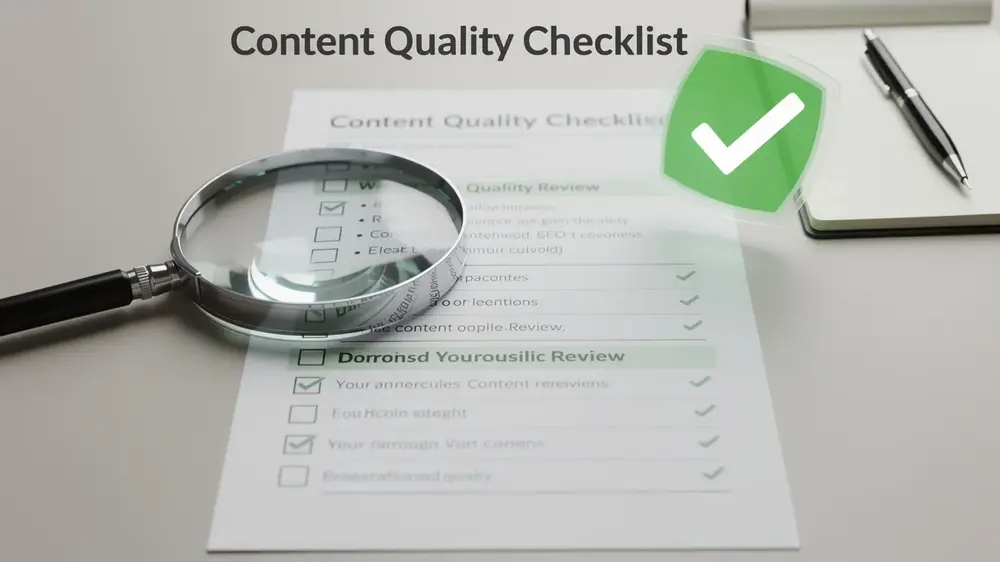
When writing or editing SEO content, review the page in this order: search intent, page promise, structure, evidence, readability, internal links, and performance tracking. This avoids the common mistake of polishing keywords before fixing the actual content problem.
Writing Engaging Titles and Meta Descriptions
Your title tag and meta description are often the first parts of your page that users see in search results. They do not need to be dramatic. They need to be clear, relevant, and honest about what the page provides.
- Title tag: A concise page title that communicates the topic and search intent.
- Meta description: A short summary that explains why the page is worth clicking.
Best practices for SEO-friendly titles:
- Use the primary keyword naturally: Place it early when it makes the title clearer.
- Keep the title focused: Avoid adding too many keyword variations.
- Match the page content: Do not promise a template, checklist, or case study unless the page actually includes it.
- Write for clicks and trust: A clear title usually performs better than a clever but vague one.
Better: “SEO Writing Guide: 12 Practical Steps for Better Content”
Avoid: “SEO Writing, SEO Content, SEO Keywords for SEO Ranking”
Best practices for meta descriptions:
- Summarize the page accurately: Make the benefit clear in one or two sentences.
- Use the target topic naturally: Avoid forcing the same keyword multiple times.
- Show a specific value: Mention the workflow, checklist, examples, or outcome the reader can expect.
- Keep it concise: Search snippets may vary, but around 150 to 160 characters is still a useful writing target.
Better: “Learn how to write SEO content with practical steps for search intent, keywords, headings, readability, internal links, and performance tracking.”
Avoid: “SEO content helps SEO and search rankings. Learn SEO content here.”
For more examples, review our guides on optimizing title tags and writing meta descriptions.
Structuring Content with Headers and Subheaders
Headings help both readers and search engines understand the structure of a page. They should not be used only for styling. A good heading tells the reader what the section covers and helps them decide whether to keep reading.
Headers are useful because they:
- Break long content into scannable sections.
- Show the relationship between main topics and subtopics.
- Help users find the answer they need faster.
- Give search engines clearer context about the page structure.
Best practices for using headers:
- Use one clear H1: The H1 should describe the main topic of the page.
- Use H2s for major sections: Each H2 should cover a distinct part of the topic.
- Use H3s for supporting points: H3s should expand the H2 section, not introduce unrelated ideas.
- Keep headings descriptive: Avoid vague headings such as “More Information” or “Important Tips.”
Example header structure for an SEO writing article:
- H1: SEO Writing Guide: Create Content That Ranks and Helps Readers
- H2: Introduction to SEO Writing
- H2: SEO Writing Keyword Research
- H3: How to Identify Relevant Keywords
- H3: Understanding Search Intent and Content Relevance
- H2: Crafting High-Quality SEO Content
- H3: Writing Engaging Titles and Meta Descriptions
For a deeper explanation, see our guide to header tags for SEO.
Balancing Readability and Keyword Optimization
Good SEO writing uses keywords to clarify the topic, not to decorate every sentence. The main keyword should appear where it helps users understand the page: the title, introduction, relevant headings, and body text. After that, focus on related questions, examples, and useful explanations.
Instead of chasing a fixed keyword density, review whether the page answers the main query better than a generic summary. A strong page usually includes the main topic, related subtopics, practical examples, and clear next steps without sounding repetitive.
Tips for balancing readability and SEO:
1. Write for the reader first:
- Start with the reader’s problem, not the keyword list.
- Remove sentences that repeat the same idea without adding new value.
2. Use keywords naturally:
- Use the primary keyword in important locations, but only where it reads naturally.
- Use related terms, synonyms, entities, and common questions to cover the topic more completely.
3. Keep paragraphs manageable:
- Short paragraphs help mobile users scan the page.
- Long paragraphs should be broken when they contain multiple ideas.
4. Optimize for featured snippets carefully:
- Answer direct questions in concise paragraphs or lists.
- Do not over-format every section as a snippet. Use the format that best serves the reader.
Better: “SEO writing means creating content that matches search intent, uses keywords naturally, and gives readers a clear answer they can apply.”
Avoid: “SEO writing SEO writing keywords SEO optimization ranking Google SEO writing.”
The best test is simple: if a sentence sounds unnatural when read aloud, it probably needs editing before publishing.
Technical Aspects of SEO Writing
Technical SEO writing is not only about the words on the page. It also includes how the content is connected, displayed, loaded, and understood. Even strong writing can underperform if the page has weak internal links, unoptimized images, poor mobile usability, or unclear metadata.
The goal is not to turn every writer into a developer. The goal is to make sure content is easy for users to access and easy for search engines to interpret.
Importance of Internal and External Links
Internal links point to other pages on the same website. External links point to relevant pages on other websites. Both can improve the usefulness of a page when they are placed with clear purpose.
Why internal links matter:
- They guide users: Internal links help readers move to related topics without searching again.
- They support site structure: Search engines use internal links to understand page relationships and priority.
- They help content clusters: Related pages become stronger when they are connected logically.
Best practices for internal links:
- Use descriptive anchor text that explains the destination page.
- Link to pages that genuinely help the reader continue learning.
- Avoid adding too many links in one paragraph.
- Check that important links are not broken, redirected unnecessarily, or repeated too often.
For a detailed linking workflow, read our guide to internal linking for SEO.
Why external links matter:
- They support trust: Reliable external sources can help readers verify important claims.
- They add context: Official documentation, studies, and industry references can make a page more useful.
- They improve editorial quality: Good sources show that the article is not written from unsupported assumptions.
Best practices for external links:
- Link to official documentation, reputable research, or trusted industry sources when supporting a factual claim.
- Use nofollow, sponsored, or UGC attributes where appropriate for paid, promotional, or user-generated links.
- Review external links during content updates because sources can change, redirect, or disappear.
Better: “For a full process, read our keyword research guide.”
Avoid: “Click here to know more about keywords.”
Optimizing Images with Alt Text
Alt text is a short description of an image. It supports accessibility by helping screen readers describe images to users, and it gives search engines more context about visual content. Good alt text should describe the image in relation to the page, not repeat keywords unnaturally.
Why image alt text matters:
- Accessibility: Users who rely on screen readers can understand the purpose of the image.
- Context: Search engines can better understand how the image relates to the surrounding content.
- Image search: Descriptive image signals can support visibility in image-based search results.
- User experience: If an image fails to load, alt text can still provide useful context.
Best practices for alt text:
- Describe the image clearly: Explain what matters in the image for the reader.
- Keep it concise: Avoid long descriptions unless the image needs more context.
- Use keywords only when natural: The alt text should not read like a keyword list.
- Avoid unnecessary phrases: You usually do not need to start with “image of” or “picture of.”
Better alt text: “SEO analytics dashboard showing organic traffic and query performance.”
Avoid: “SEO dashboard, analytics, graph, SEO image, SEO writing.”
Additional image optimization tips:
- Compress images before uploading.
- Use descriptive filenames, such as seo-writing-dashboard.webp instead of IMG1234.webp.
- Add captions only when they provide helpful context.
- Check that images do not cause layout shifts on mobile.
For practical examples, see our guide to image SEO and alt text.
Mobile-Friendly Content Design
Mobile-friendly content is not only a design issue. It affects how easily users can read, tap, compare, and complete actions on a page. Since Google uses mobile-first indexing, the mobile version should contain the same important content, internal links, structured data, and helpful context as the desktop version.
Key principles of mobile-friendly content design:
1. Responsive design:
- The page should adapt cleanly to different screen sizes.
- Avoid desktop-only layouts that require zooming or horizontal scrolling.
2. Readable text:
- Use readable font sizes and sufficient contrast.
- Break long sections into shorter paragraphs and clear headings.
3. Fast-loading images:
- Compress images and use modern formats where appropriate.
- Set proper width and height attributes to reduce layout shifts.
4. Easy-to-tap elements:
- Buttons and links should be large enough to tap comfortably.
- Avoid placing clickable elements too close together.
5. Reduced interruptions:
- Avoid intrusive pop-ups that cover the main content.
- Make navigation and calls to action easy to find without blocking the reading experience.
6. Core Web Vitals checks:
- Review loading speed, responsiveness, and visual stability.
- Pay attention to LCP, INP, and CLS when diagnosing mobile page experience issues.
AMP may be useful in specific publishing contexts, but it is not a universal requirement. Most websites should first focus on responsive design, speed, image compression, clean navigation, and content parity between desktop and mobile. For a practical checklist, read our mobile SEO guide.
Common SEO Writing Mistakes to Avoid
Many SEO writing problems come from trying to optimize too early. If the search intent, structure, and usefulness are weak, adding more keywords or tools will not solve the page. The following mistakes are common in beginner articles and even in some large content operations.
Overusing Keywords (Keyword Stuffing)
Keyword stuffing is the excessive or unnatural use of keywords in content, headings, meta tags, or anchor text. It makes the page harder to read and can make the content feel spammy or untrustworthy.
Why keyword stuffing hurts SEO:
- It damages readability: Repeated phrases interrupt the natural flow of the article.
- It weakens trust: Readers can quickly tell when a page is written for search engines rather than people.
- It creates shallow coverage: Repeating the same keyword often replaces the deeper explanation the page actually needs.
Signs of keyword stuffing:
- The same phrase appears in almost every sentence.
- Headings repeat the exact keyword without adding context.
- The content uses unnatural phrases only because a tool suggested them.
- The article sounds repetitive when read aloud.
How to avoid keyword stuffing:
- Use natural placement: Put the primary keyword where it clarifies the topic.
- Use related terms: Include synonyms, subtopics, and user questions naturally.
- Avoid fixed keyword density targets: Instead of chasing 1 or 2 percent density, focus on whether the page fully answers the query.
- Edit for flow: Remove repeated phrases that do not add meaning.
Stuffed version: “Best coffee machines are the best for coffee lovers looking for the best coffee experience with the best coffee machines.”
Better version: “The best coffee machine depends on how you brew, how much counter space you have, and whether you prefer espresso, drip coffee, or capsules.”
For more guidance, see our article on keyword density and why natural usage matters more than a fixed percentage.
Ignoring User Experience (UX)
User experience in SEO writing refers to how easily a reader can access, scan, understand, and act on the content. A page can be technically optimized and still underperform if it is difficult to read, slow to load, or confusing to navigate.
Why UX matters for SEO writing:
- It affects reader satisfaction: Users are more likely to trust and continue reading a page that is clear and well organized.
- It supports engagement: Metrics such as engagement time, bounce rate, and conversions help site owners evaluate whether content satisfies users, but they should not be treated as simple direct ranking formulas.
- It improves accessibility: Clear structure, readable fonts, descriptive links, and useful alt text help more users access the content.
- It matters on mobile: Most readers will not tolerate tiny text, overlapping buttons, or slow-loading pages on a phone.
Common UX mistakes in SEO writing:
- Long walls of text without headings or breaks.
- Generic introductions that delay the answer.
- Intrusive pop-ups that cover the main content.
- Slow page speed caused by heavy images or scripts.
- Internal links with vague anchor text such as “click here.”
How to improve UX in SEO writing:
- Use clear H2 and H3 headings.
- Answer the main query near the top of the article.
- Break long paragraphs into smaller units.
- Add examples, tables, or visuals only when they improve understanding.
- Review the page on mobile before publishing.
Poor UX example: A 1,000-word article block with no subheadings, no links, no examples, and no clear next step.
Better UX example: An article with a clear answer, short paragraphs, useful headings, descriptive links, and examples that support the topic.
Neglecting Content Updates and Refreshes
Content updates matter when facts, tools, search intent, competitors, or user expectations change. However, not every article needs constant rewriting. A stable evergreen page may only need light updates, while a fast-changing topic may need frequent review.
The risks of neglecting content updates:
- Outdated information: Old tool recommendations, statistics, or screenshots can reduce trust.
- Search intent drift: The SERP may change from guides to tools, comparisons, or videos.
- Competitor improvements: Other pages may add better examples, clearer structure, or more current sources.
- Lower engagement: Readers may leave if the page does not reflect current expectations.
When should you update content?
- Search Console shows declining clicks or impressions for important queries.
- The article includes outdated tools, dates, screenshots, or platform names.
- The top-ranking pages now answer the query in a different format.
- The page has high impressions but low CTR.
- The page receives traffic but does not support conversions or next-page visits.
How to refresh old content effectively:
- Update outdated facts, examples, and references.
- Rewrite weak introductions so the answer appears earlier.
- Add missing sections based on current SERP and Search Console query data.
- Improve internal links to newer, related content.
- Refresh title tags and meta descriptions when CTR is weak.
Outdated example: An article titled “Top Social Media Trends in 2019” left unchanged for years.
Better example: An evergreen guide that is reviewed every 6 to 12 months and updated when tools, examples, or user expectations change.
For long-term planning, our SEO content strategy guide explains how content updates, new articles, and topic coverage can work together.
Measuring SEO Writing Success
SEO writing success should be measured by more than ranking position. A page may rank but fail to earn clicks, or it may earn traffic but fail to support business goals. Review performance in stages: impressions, clicks, engagement, conversions, and content decay.
Key Metrics to Track Content Performance
Tracking the right metrics helps you understand where a page is succeeding and where it needs improvement. The most useful metrics depend on the goal of the page. An educational article, a service page, and a product comparison should not be judged in exactly the same way.
Essential SEO writing metrics to monitor:
1. Impressions
- Shows how often your page appears in search results.
- High impressions with low clicks may suggest weak titles, poor snippet relevance, or ranking in less visible positions.
2. Organic clicks
- Shows how many users visit the page from unpaid search results.
- Useful for measuring whether search visibility is turning into actual traffic.
3. Click-through rate (CTR)
- Shows the percentage of impressions that become clicks.
- Often influenced by title tags, meta descriptions, brand trust, and SERP layout.
4. Average position
- Shows the average ranking position for queries in Search Console.
- Review this by query and page rather than relying only on one overall average.
5. Engagement
- Use GA4 to review engagement time, scroll events, conversions, and next-page visits.
- Engagement metrics help diagnose usefulness, but they should be interpreted with context.
6. Conversions
- Measures whether the page supports a business or editorial goal, such as signup, inquiry, sale, download, or newsletter subscription.
- For informational pages, assisted conversions and internal link clicks may be more useful than direct sales.
7. Backlinks and referral traffic
- Shows whether other websites are referencing your content.
- Useful for evaluating whether a guide, research page, or original resource is earning authority signals.
How to set content performance goals:
- Connect each metric to the page purpose.
- Use baseline data before setting growth targets.
- Separate leading indicators, such as impressions, from business outcomes, such as conversions.
- Review performance after enough time has passed for crawling, indexing, and ranking movement.
A useful measurement routine starts with Google Search Console for search visibility, then moves to GA4 for behavior after the click.
Using Analytics Tools for Insights
Analytics tools help you move from opinion to evidence. Instead of asking whether a page “feels optimized,” you can check whether it earns impressions, clicks, engagement, and conversions for the queries you actually care about.
Useful analytics tools for SEO writing:
1. Google Analytics 4 (GA4)
- Tracks user behavior, events, engagement, conversions, and traffic sources.
- Useful for understanding what users do after they arrive on the page.
2. Google Search Console
- Tracks queries, impressions, clicks, CTR, average position, indexing issues, and page performance in search.
- Useful for finding pages that need better titles, updated sections, or improved internal links.
3. Ahrefs
- Useful for backlinks, competitor keywords, content gaps, and SERP analysis.
- Helpful when deciding whether to update existing content or create a new page.
4. SEMrush
- Useful for keyword tracking, competitor research, content gaps, and site audits.
- Helpful for planning a wider content calendar around clusters and opportunities.
5. Heatmap and behavior tools
- Tools such as Hotjar can show how users scroll, click, and interact with a page.
- Useful for identifying friction points, especially on landing pages and long guides.
6. Rank tracking and content tools
- These can help monitor ranking changes and content coverage, but they should not replace human review.
- A tool score is useful only when it leads to a better answer for the reader.
How to use analytics data effectively:
- Identify high-performing pages: Look for pages with strong clicks, engagement, and conversions.
- Find underperforming pages: Look for pages with impressions but low CTR, or traffic but weak engagement.
- Review query mismatch: If users find the page through unexpected queries, the content may need clearer positioning.
- Compare before and after updates: Track changes in clicks, CTR, engagement, and conversions after content refreshes.
- Avoid overreacting to short-term changes: SEO results often need enough time to stabilize after updates.
For example, if a blog post has high traffic but low conversions, the issue may not be keyword targeting. It may need a clearer call to action, stronger internal links, better trust signals, or a better match between the page promise and the reader’s next step.
Adjusting Your Content Strategy Based on Data
SEO writing is an ongoing process. After publishing, performance data should guide whether a page needs a small metadata update, a content refresh, a new section, a stronger internal link, or a completely different page targeting a different intent.
Steps to adjust your SEO writing strategy:
1. Identify content gaps:
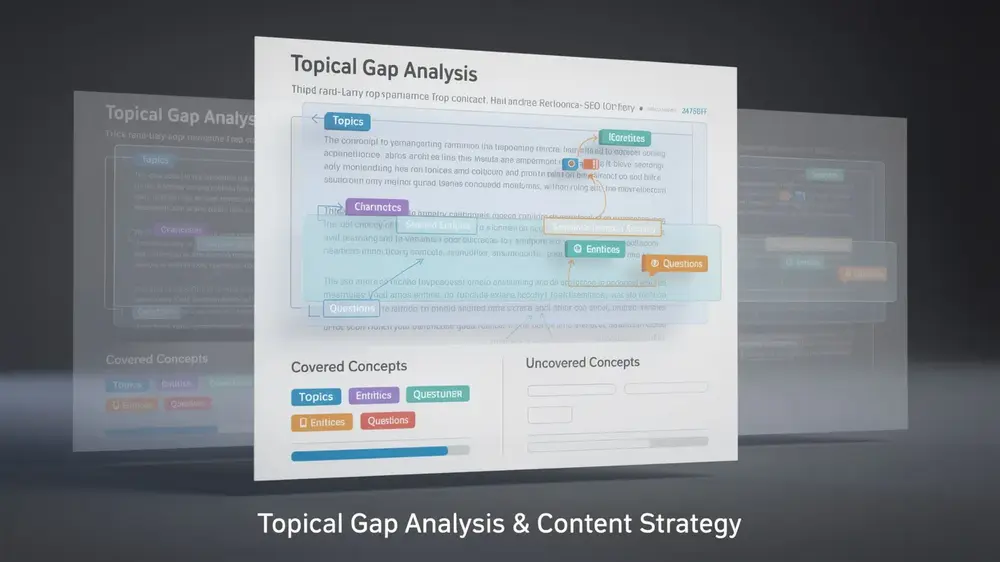
- Use Search Console and competitor research to find questions your current page does not answer.
- Create a new section only when it supports the page intent. Otherwise, create a separate article.
2. Update outdated content:
- Replace old facts, screenshots, examples, and tool recommendations.
- Remove outdated services or platforms that no longer exist.
3. Improve underperforming pages:
- If impressions are high but CTR is low, review the title and meta description.
- If clicks are high but engagement is weak, review the introduction, structure, readability, and page speed.
4. Check search intent again:
- SERP intent can change over time, especially in fast-moving niches.
- Update the page format if the query now rewards a different type of content.
5. Test changes carefully:
- Google Optimize is no longer available, so use another experiment platform, CMS testing feature, or a controlled before-and-after review using Search Console and GA4.
- Document what changed and when, so performance shifts can be interpreted correctly.
6. Prioritize evergreen pages:
- Evergreen content can become a long-term traffic asset when it is maintained properly.
- Review important evergreen pages at least a few times per year, or sooner when the topic changes quickly.
Example of strategy adjustment based on data:
- Observation: A blog post ranks on page two and earns impressions but few clicks.
- Action: Improve the title, rewrite the introduction, add missing subtopics from query data, and link from a related high-traffic page.
- Review: Compare Search Console clicks, CTR, and average position after the update window.
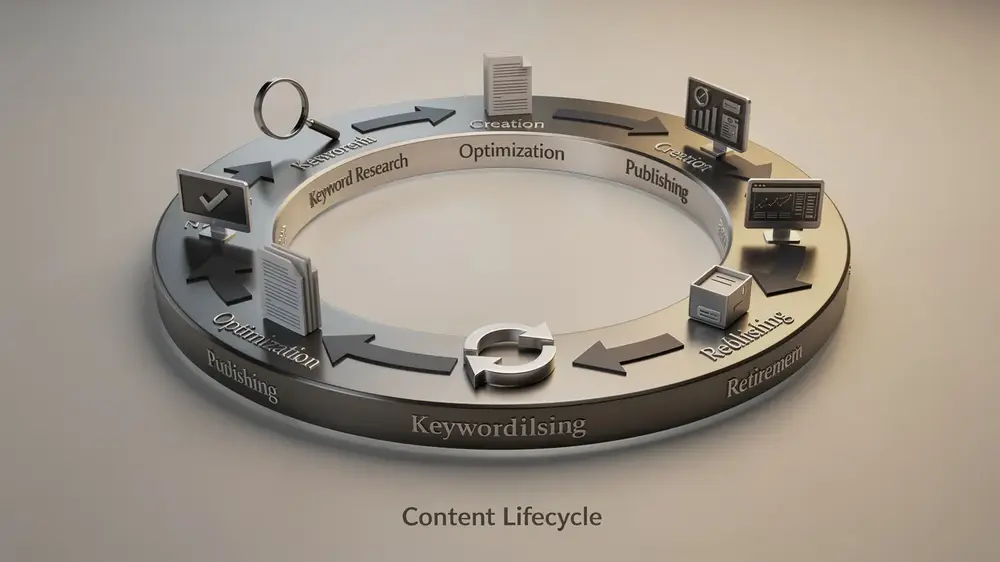
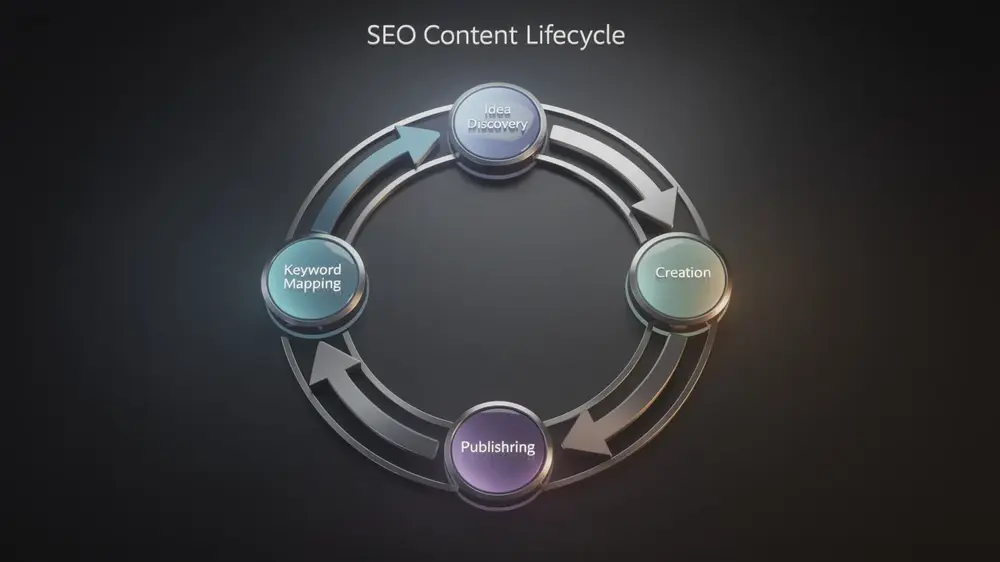
A good strategy is not built from one article. It is built from repeated improvement: publish, measure, learn, update, and connect related pages more clearly.
Frequently Asked Questions (FAQs)
What is the Difference Between SEO Writing and Traditional Writing?
SEO writing is planned around search intent, keywords, headings, metadata, internal links, and measurable search performance. Traditional writing may focus more on storytelling, brand voice, creativity, or print-style communication without needing to satisfy a specific search query. The strongest web content often blends both: it uses SEO structure without losing a natural human voice.
How Often Should You Update SEO Content?
SEO content should be updated when the information, tools, search intent, or competitive landscape changes. Evergreen content can often be reviewed every 6 to 12 months, while fast-changing topics may need more frequent checks. Use Google Search Console to identify pages with declining clicks, weak CTR, or new query opportunities.
Are Long-Form Articles Better for SEO?
Long-form articles can perform well when the topic requires depth, examples, comparisons, or a step-by-step explanation. However, length alone does not improve SEO. A short page that answers a simple query clearly can be better than a long article filled with repetition. The right length depends on search intent and the complexity of the topic.
What Tools Are Essential for SEO Writing?
Essential SEO writing tools usually include Google Search Console for search performance, GA4 for user behavior, a keyword research tool for topic planning, and a writing or editing tool for clarity. Advanced teams may also use tools for content briefs, rank tracking, technical audits, heatmaps, and competitor analysis. Beginners should focus on learning the workflow before buying too many platforms. For a specific platform example, see our Surfer SEO guide.