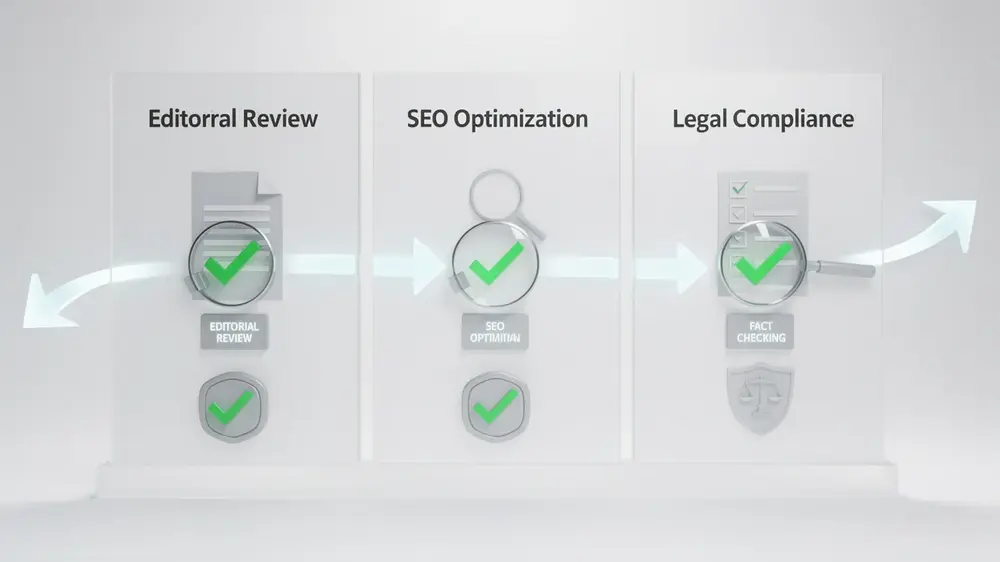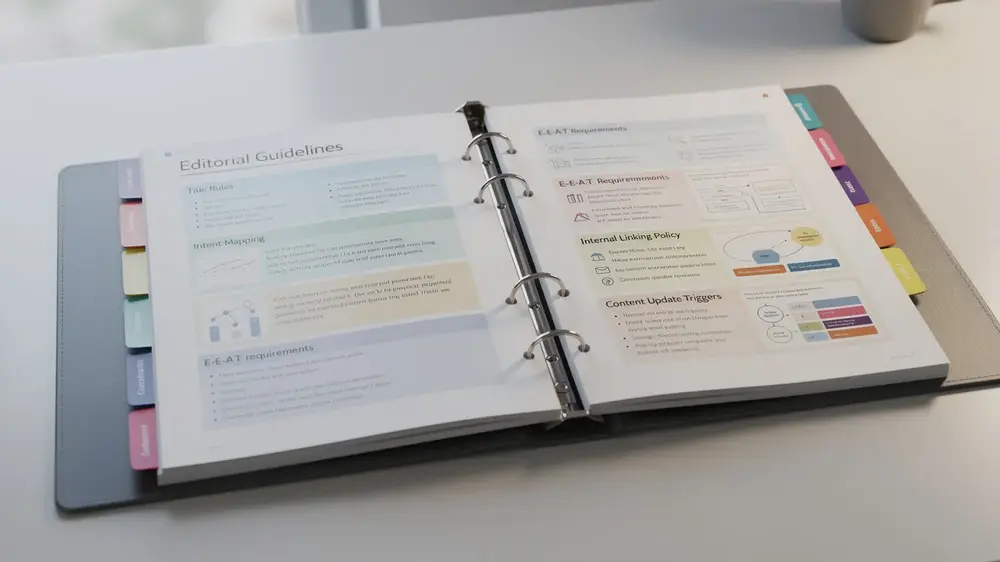
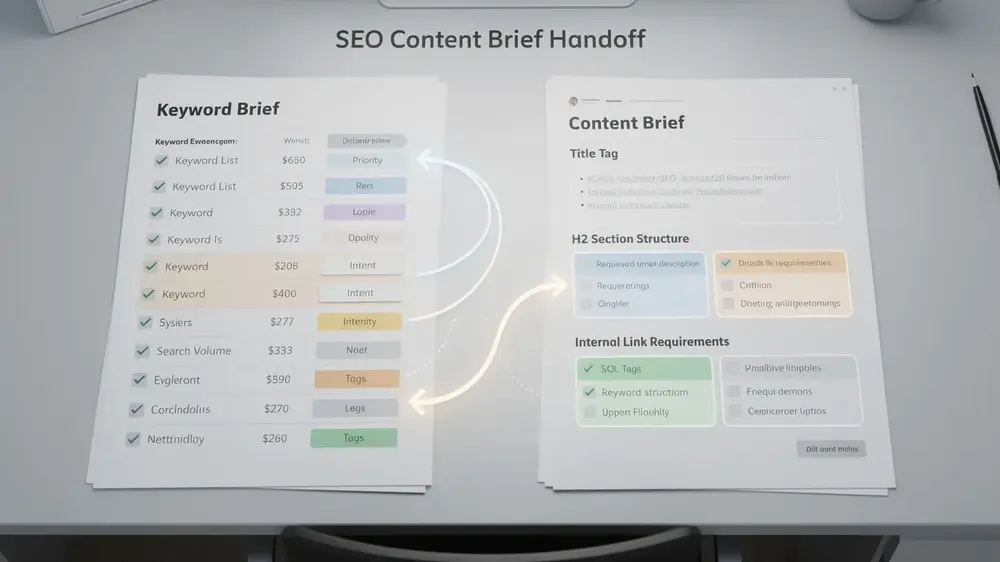
An SEO handoff checklist for writers turns search research, editorial goals and brand requirements into practical instructions that can guide a draft from the first outline to final approval. It should tell the writer who the page is for, what the reader needs to achieve, which questions must be answered, what evidence is required and how the finished work will be reviewed.
A good handoff is not a keyword-placement worksheet. It is a shared working document that reduces uncertainty between SEO specialists, writers, editors, subject matter experts and regional content teams. When that document is vague, a writer may produce polished copy that addresses the wrong audience, duplicates an existing page, relies on weak sources or follows a structure that does not match the search intent.
- An SEO handoff should define the page purpose, audience, search intent, required evidence, content scope, internal links, brand rules and approval criteria.
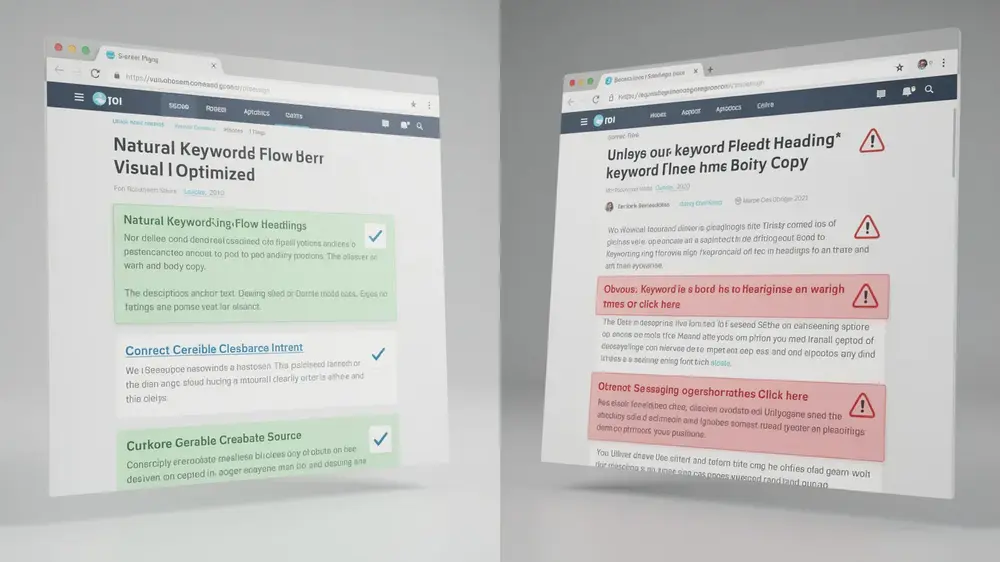
- The target topic should be clear in the title, main heading and opening section, but exact-match keyword placement should not be forced into every heading.
- Writers should question unclear briefs before drafting, particularly when the proposed structure conflicts with search intent, available evidence or the needs of the audience.
- Source quality depends on relevance, authority and current accuracy. A recent source is not automatically better than an older primary source.
- The handoff should support editorial judgment rather than replace it. Writers and editors still need room to improve the structure when a clearer solution becomes apparent during research.

What Is an SEO Handoff Checklist for Writers?
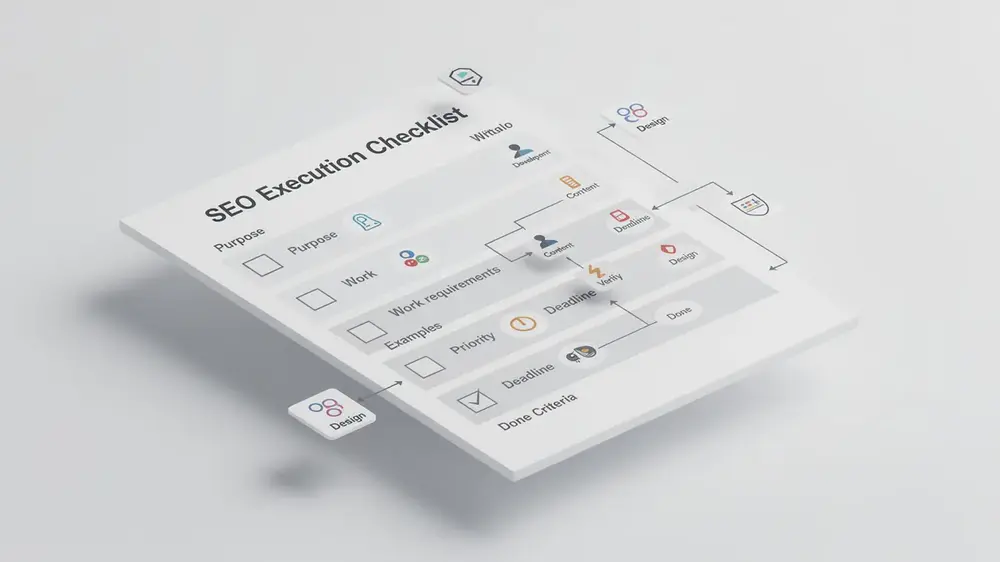
An SEO handoff checklist is a structured document used to transfer research, editorial direction and search requirements to the writer responsible for producing the content. It usually sits between the planning stage and the first draft.
The handoff may be delivered through a project management ticket, a shared document, a content operations platform or a dedicated briefing template. The format is less important than the clarity of the information. The writer should be able to understand what the page is expected to achieve without reconstructing the strategy from a list of keywords.
How It Differs from an SEO Content Brief
The terms are sometimes used interchangeably, but they are not always identical. An SEO content brief usually defines the proposed article, including the audience, search intent, subject coverage, suggested structure and supporting research. A handoff checklist confirms that those requirements have been transferred clearly and gives the writer, editor and SEO reviewer a shared set of checks for drafting and approval.
Teams that need the planning document itself can refer to this guide on how to build an SEO content brief. The handoff discussed here focuses more closely on what the writer receives, what should be clarified before drafting and how the completed work is reviewed.
What a Complete Writer Handoff Should Include
A practical handoff normally covers:
- Page purpose: What the reader should understand, decide or do after reading.
- Primary audience: Who the content is for and what level of knowledge can be assumed.
- Search intent: The main need behind the query and any secondary intent that may influence the format.
- Topic scope: The questions and subtopics that belong on the page, along with issues that should remain outside the brief.
- Evidence requirements: The documentation, data, first-hand experience, expert review or examples needed to support important claims.
- Brand requirements: Voice, terminology, restricted claims, localisation notes and market-specific wording.
- Internal links: Relevant destination pages and the context in which they would help the reader.
- Editorial review criteria: The standards used to approve accuracy, usefulness, originality and intent alignment.
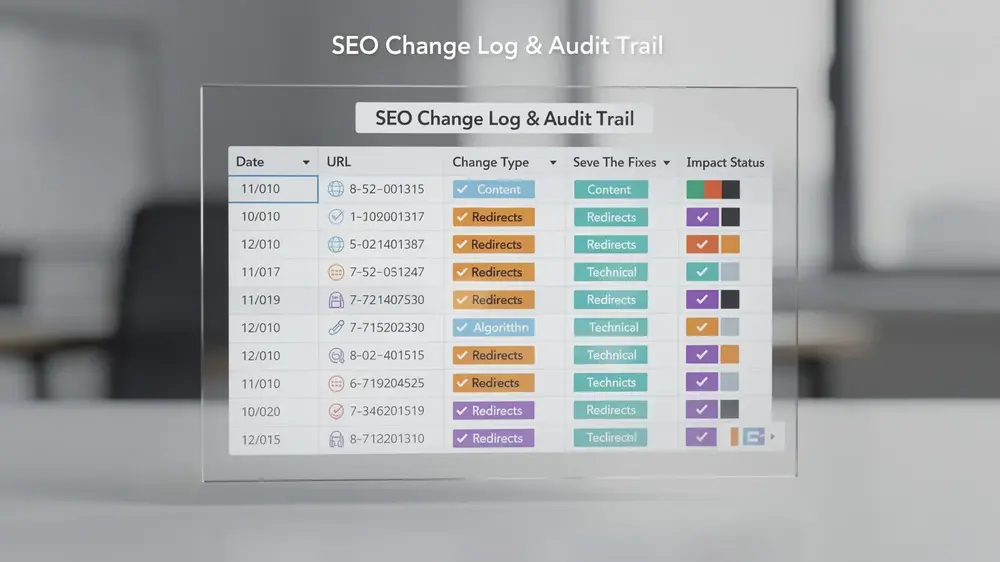
- Ownership: Who answers questions, approves changes and takes responsibility for future updates.
A target length may also be included, but it should be treated as an estimated range rather than a fixed measure of quality. The required depth depends on the topic, the reader and the amount of explanation needed to satisfy the page purpose.
How an SEO Handoff Supports Better Content Decisions
A well-prepared handoff protects the time invested in research and writing by resolving important questions before the draft becomes difficult to change. Its value is not limited to keyword use. It helps teams agree on the audience, page format, evidence standard, brand position and relationship with existing content.
Search Intent and Page Format
Search intent should influence the type of page being produced. A reader looking for a definition may need a concise explanation. Someone comparing services may expect criteria, limitations and alternatives. A person searching for a checklist is likely to want a usable list, template or process rather than a long conceptual introduction.
Before accepting the outline, writers should evaluate the search intent behind the keyword and check whether the proposed page format matches what users appear to need. This does not mean copying the structure of ranking pages. It means understanding the dominant expectation and identifying where the new article can be clearer, more useful or more current.
Search results may also reflect mixed intent. A query can produce guides, templates, product pages and videos at the same time. In that situation, the handoff should identify the primary audience and the main task the page is expected to support rather than trying to satisfy every possible interpretation.
Topic Relevance Without Mechanical Keyword Placement
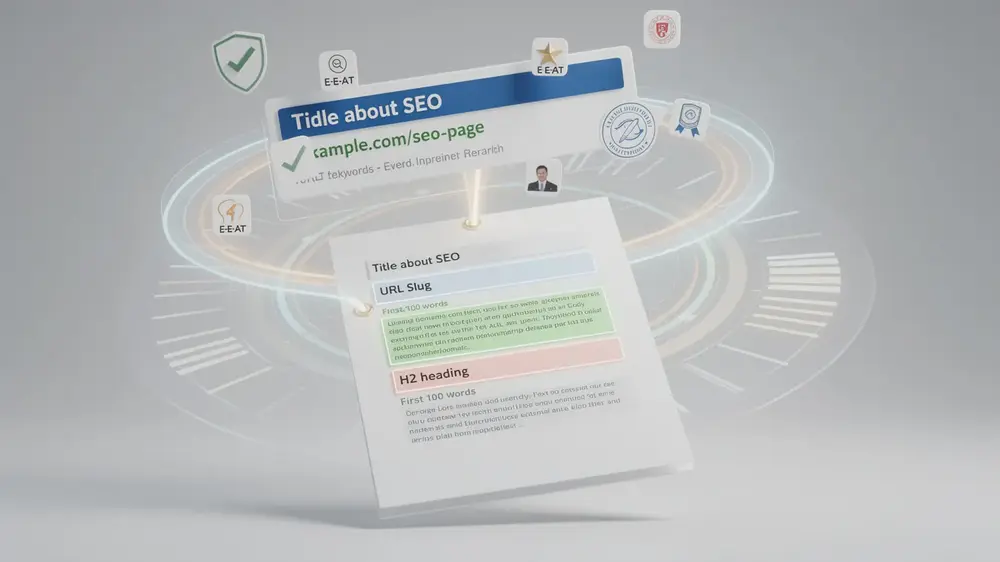
The main subject should be clear from the title, H1 and opening section. Writers may also use the target phrase or a natural variation in subheadings when it accurately describes the section. There is no universal requirement to place an exact-match keyword within the first 100 words, in a fixed number of headings or again in the conclusion.
Related terms and supporting subtopics should appear where they improve the explanation. A list exported from a keyword tool is not a list of phrases that must all be inserted. Some terms may represent separate search intents, duplicate the same idea or belong on another page.
The SEO specialist should therefore summarise how keyword research informs the content brief, including the central topic, useful supporting questions and terms that may require separate content. The writer should not need to interpret a large spreadsheet without guidance.
Experience, Expertise and Trust
Experience, expertise, authoritativeness and trust can help teams assess whether a draft gives readers a reasonable basis for relying on it. The type of evidence required depends on the subject.
A product review may require documented testing. A technical guide may need primary documentation, implementation examples and clear limitations. A strategic article may benefit from first-hand operational observations, but those observations should be identified as experience rather than presented as universal evidence.
Editors can evaluate experience, expertise and trust in a draft by asking whether claims are supported, uncertainty is acknowledged and the author has provided an appropriate basis for the advice. Adding an expert quotation or a list of external links does not strengthen a page unless those elements genuinely support the content.
SEO Handoff Checklist for Writers
The following checklist can be adapted to editorial guides, educational articles, comparison pages, multilingual content and commercial landing pages. Not every item is required for every project, but unclear or missing information should be resolved before substantial drafting begins.
1. Page Purpose and Intended Outcome
- What should the reader understand, decide or do after reading?
- Is the page primarily educational, navigational, comparative or commercial?
- What is the single most important question the article must answer?
- Is there a business objective that needs to be considered without weakening editorial usefulness?
- Does the proposed content duplicate an existing page?
2. Audience and Knowledge Level
- Who is the primary reader?
- What can the article reasonably assume they already know?
- Which terms need to be explained?
- Are there different audience groups with conflicting needs?
- Does the language need to be adjusted for beginners, specialists, decision-makers or consumers?
3. Search Intent and Content Format
- What is the primary search intent?
- Is there a meaningful secondary intent?
- Do readers appear to expect a guide, checklist, comparison, definition, tutorial or landing page?
- Is freshness important for this query?
- Does the search result differ by country, language or device?
- Does the proposed outline match the reader’s likely task?
4. Required Topic Coverage
- Which questions must be answered for the page to feel complete?
- Which sections are essential and which are optional?
- Are any suggested headings repetitive?
- Should any subtopic be handled on a separate page?
- Are there limitations, exceptions or risks that should be explained?
- Does the article need examples, screenshots, data, definitions or step-by-step instructions?
Related search features can help writers identify useful follow-up questions, but only questions that support the page’s purpose should be included. Expanding an article with every available related query often creates repetition rather than useful depth.
5. Keyword and Terminology Guidance
- What is the primary topic or reference keyword?
- Which natural variations may help the writer avoid repetitive wording?
- Are any terms brand-specific, legally sensitive or market-specific?
- Are there phrases that should not be used?
- Do any keyword suggestions represent a different intent or require a separate page?
- Should technical terminology be retained, translated or explained?
The target topic should be apparent to the reader, but the brief should not require exact-match repetition for its own sake. Writers should prioritise meaning, readability and accuracy over keyword density.
6. Structure and Editorial Direction
- Is the H1 provided, suggested or open to editorial revision?
- Which H2 sections are required?
- Can the writer reorganise the outline if research reveals a clearer sequence?
- Does the page need a summary, table, checklist, FAQ or comparison section?
- Are there sections that need direct answers near the beginning?
- Should the article follow a chronological, problem-solution, comparative or instructional structure?
Headings, lists and manageable paragraphs can make complex information easier to scan. Their value should be judged by readability and comprehension rather than treated as direct ranking requirements. Some ideas need one sentence, while others require a fuller explanation.
7. Evidence and Source Requirements
- Which claims require primary sources?
- Are current laws, prices, platform policies, product details or statistics involved?
- Does the writer need first-hand testing or expert review?
- Are there preferred official sources?
- Should conflicting evidence be acknowledged?
- Does the source still support the claim being made?
Source quality cannot be judged by age alone. Time-sensitive statistics, regulations, platform policies and technical documentation need current verification. Original research, historical records and stable standards may remain useful for much longer. The writer should confirm relevance and accuracy rather than rejecting a source only because it is older.
8. Internal and External Links
- Which existing pages genuinely help readers continue the topic?
- Are there priority pages that should be considered without forcing a link?
- What context should surround each internal link?
- Are any suggested destinations outdated, redirected or unrelated?
- Which external claims need citation?
- Should any link open in a new tab under the site’s editorial policy?
The brief may suggest destination pages, but the writer should still plan useful internal links for the reader and choose anchor text that accurately describes the destination. Generic wording such as “click here” provides limited context, although descriptive anchors should also remain concise and natural.
9. Brand Voice and Localisation
- What tone should the writer use?
- Are there approved or restricted brand claims?
- Should the article use first person, neutral editorial voice or direct instruction?
- Are cultural references appropriate for the target market?
- Does the content need local spelling, terminology, currencies or examples?
- Who approves regional adaptations?
A global English brief should not automatically be reused without adjustment for Japanese, Korean or European audiences. Search intent, content length, examples, trust signals and preferred levels of directness can differ between markets. The technical topic may remain the same, but the way the article explains and prioritises information may need to change.
10. Ownership, Questions and Approval
- Who created the brief?
- Who answers questions during drafting?
- Who can approve a change to the proposed structure?
- Who verifies factual or technical claims?
- Who completes the SEO review?
- Who is responsible for future updates?
Teams should assign clear content ownership so that writers know where to raise questions and editors know who is responsible for keeping the page accurate after publication.
Questions Writers Should Ask Before Drafting
A writer should not begin simply because every field in the brief has been completed. The information must also be consistent, realistic and supported by the resources available.
Does the Proposed Format Match the Reader’s Need?
A checklist query should normally provide a usable checklist. A comparison query should make the basis of comparison clear. A beginner guide should not assume technical knowledge that the intended audience is unlikely to have.
If the proposed outline does not match the likely task, the writer should raise the issue before drafting rather than attempting to correct the mismatch through wording alone.
Is the Brief Asking for Unsupported Claims?
Writers should identify claims that require data, testing, legal review, subject matter expertise or current documentation. If the requested evidence is unavailable, the brief may need to be narrowed or the language made more conditional.
For example, a writer should not be asked to claim that a particular format increases rankings without a reliable basis. It may be accurate to explain that the format improves clarity or helps readers compare information, but a ranking outcome depends on many other factors.
Are the Keywords Supporting the Topic or Distorting It?
Keyword lists often contain overlapping phrases, tool-generated variations and queries with different intent. The writer should not treat each item as mandatory.
A useful question is: does this term help answer the reader’s main problem? If it introduces a separate subject or forces an unnatural section, it may belong in another article.
Does the Outline Repeat the Same Answer?
Automated research and competitive reviews can produce several headings that express the same idea in slightly different language. Writers should consolidate those sections rather than repeat a claim for every keyword variation.
This is particularly important for introductions, key takeaways, main sections, conclusions and FAQs. Each format should serve a different reading need rather than restating the same paragraph several times.
Can the Writer Improve the Brief?
A content brief should provide direction, not prevent sound editorial judgment. Research may reveal that a heading is inaccurate, a section is unnecessary or a different sequence would help the reader more.
The writer should know whether changes can be made directly or require approval. This protects the original strategy while allowing the content to improve as the subject becomes clearer.
A useful brief gives the writer a clear starting point, but it should not become a ceiling on the quality of the finished article. The strongest workflows leave room for the writer to question weak assumptions, improve the structure and explain where the evidence does not support the original request. – Martha Vicher, mocobin.com

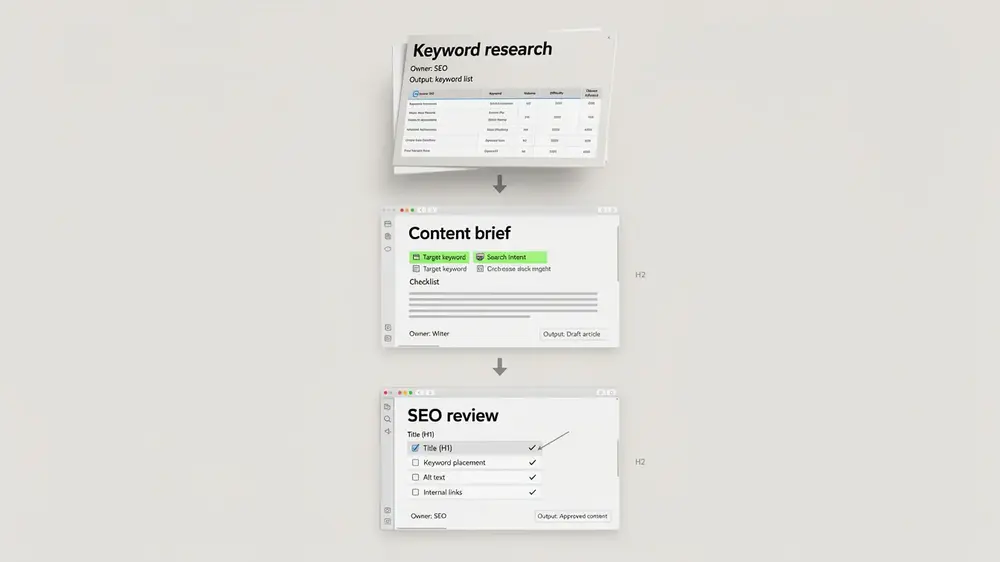
From Handoff to Publication: A Four-Stage Workflow
The handoff should be part of a defined workflow rather than an isolated document. A practical process can be divided into research, briefing, drafting and review.
Stage 1: Research and Page Planning
The SEO or content strategist identifies the likely audience, search intent, existing content, competing page formats and evidence requirements. The purpose of this stage is not to produce the longest possible keyword list. It is to define the page opportunity clearly enough for editorial planning.
The strategist should also check whether the proposed article overlaps with an existing MOCOBIN page. If the intent is already satisfied, updating or consolidating content may be more useful than publishing a near-duplicate article.
Stage 2: Brief and Handoff Preparation
The specialist turns the research into a writer-facing document. It should distinguish between mandatory requirements and optional suggestions.
Mandatory elements may include:
- the page purpose;
- the intended audience;
- required claims or disclaimers;
- essential subject coverage;
- approved brand terminology;
- source requirements;
- internal pages that should be reviewed;
- the person responsible for answering questions.
Optional elements may include suggested headings, example phrases, estimated length and additional questions that the writer can include if they improve the article.
Stage 3: Drafting and Source Verification
The writer uses the brief as a working reference, not a script. Research should confirm whether the proposed claims remain accurate and whether the outline still makes sense once the evidence is reviewed.
During drafting, the writer should:
- answer the primary question early;
- avoid repeating the target phrase mechanically;
- distinguish facts from interpretation;
- explain limitations and exceptions;
- use examples that match the intended market;
- check that links support the surrounding claim;
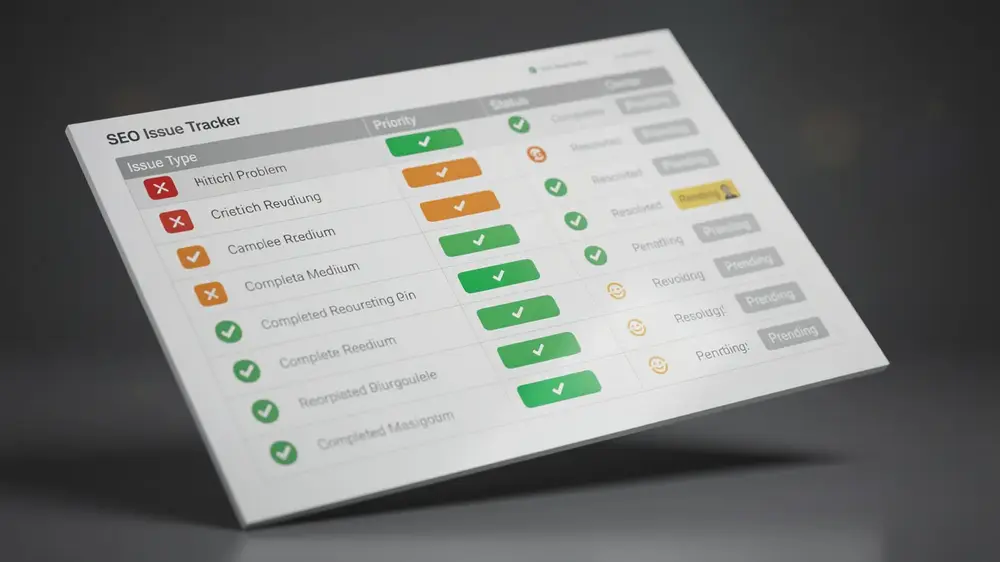
- record unresolved questions for the editor or specialist.
Stage 4: Editorial and SEO Review
The completed draft should be reviewed against the original purpose rather than checked only for keyword placement. The reviewer should ask:
- Does the article satisfy the intended search need?
- Is the main answer easy to find?
- Are important claims accurate and supported?
- Does the article add useful explanation rather than repeat common advice?
- Are internal links relevant to the reader’s next step?
- Does the wording follow brand and localisation requirements?
- Are the title, heading structure and metadata consistent with the page?
- Has the writer introduced unsupported certainty?
- Does the page need expert, legal or technical review before publication?
The review should also verify that the final article has not become over-optimised during editing. Excessive repetition can make content difficult to read and may become keyword stuffing when phrases are inserted unnaturally for ranking purposes.
Adapting SEO Handoffs for International Content Teams
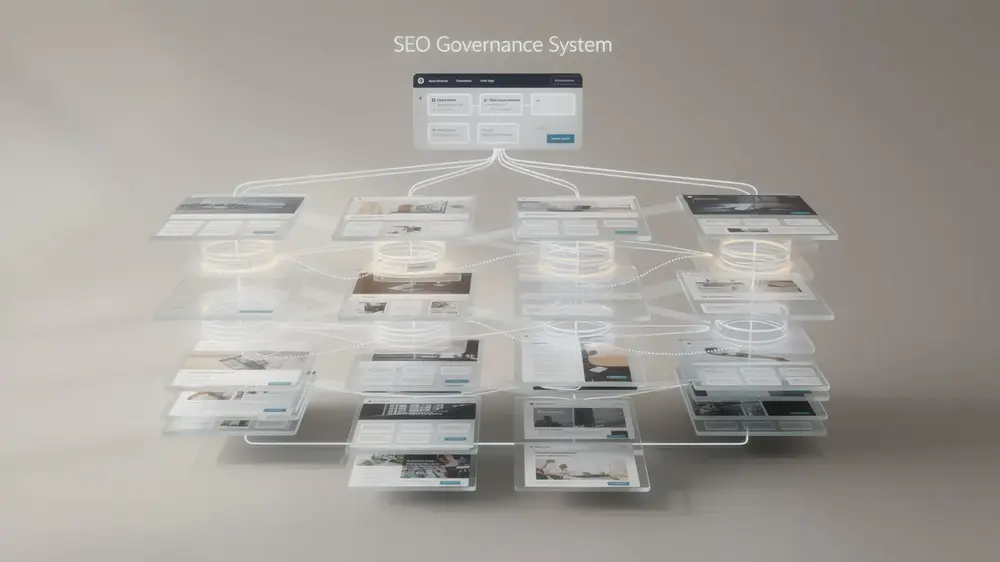
International content operations need a distinction between global requirements and local editorial decisions. A single global brief may define the product, technical facts and brand position, but regional teams should not be expected to reproduce the same wording, examples and structure without review.
Global Requirements
Global requirements may include:
- approved product facts;
- restricted or regulated claims;
- core brand terminology;
- mandatory legal notices;
- source standards;
- technical publishing requirements;
- the central page objective.
Market-Level Decisions
Regional teams may need control over:
- local search terminology;
- headline style;
- examples and cultural references;
- currency, date and measurement formats;
- the level of background explanation;
- commercial phrasing;
- local internal links;
- market-specific trust signals.
English content often favours direct, task-led headings, but even English-language audiences differ by region and industry. Japanese content may require more context before a recommendation, while Korean search results may place stronger emphasis on comparison, current examples or platform-specific terminology. These are not fixed cultural rules, but they are practical reasons to validate intent and language in each market rather than relying only on translation.
The handoff should therefore indicate which parts are fixed and which can be adapted. This reduces inconsistent brand messaging without forcing regional writers into language that feels unnatural or fails to match local search behaviour.
Authorship and Editorial Accountability
Where authorship matters to the subject, the publishing workflow should document the writer’s relevant expertise and connect the article to an accurate author profile. The author page should reflect genuine experience and responsibilities rather than rely on broad claims that cannot be verified.
Authorship does not replace source verification. It helps readers understand who is responsible for the content and why their perspective may be relevant.