

Google Search snippets, the preview blocks of title, URL, and descriptive text that appear for each result on a search engine results page, directly influence whether a user clicks through to your site or moves on. Understanding how Google generates and selects these previews is a practical necessity for anyone working to improve organic traffic and click-through performance.
- A Google Search snippet is composed of a page title, URL, and short descriptive text, and exists to help users judge relevance before clicking.
- Google uses the meta description you write as the actual snippet only around 28% of the time, pulling from page body content in the majority of cases.
- Well-structured body content matters as much as meta descriptions, since Google draws from both when composing the snippet it displays for a given query.
- Duplicate meta descriptions and keyword stuffing are common mistakes that weaken click-through rates and often cause Google to discard the description entirely.
- Regularly comparing your provided meta descriptions against the snippets Google actually shows can reveal where on-page content needs to better address the target query.

What Is a Google Search Snippet and Why Does It Exist?
A Google Search snippet is the preview block that appears for each result on a search engine results page. It typically consists of three parts: the page title (displayed as a clickable blue link), the URL, and a short descriptive text that summarizes the page content. Together, these elements give users enough context to judge whether a result is worth clicking before they visit the site.
Snippets exist primarily to serve the user. Rather than requiring someone to open multiple tabs and read full pages, Google surfaces a condensed preview that helps match intent to content quickly. This matters for marketers because a well-constructed snippet can meaningfully improve Click-Through Rate (CTR), which in turn signals relevance to Google and drives more qualified traffic.
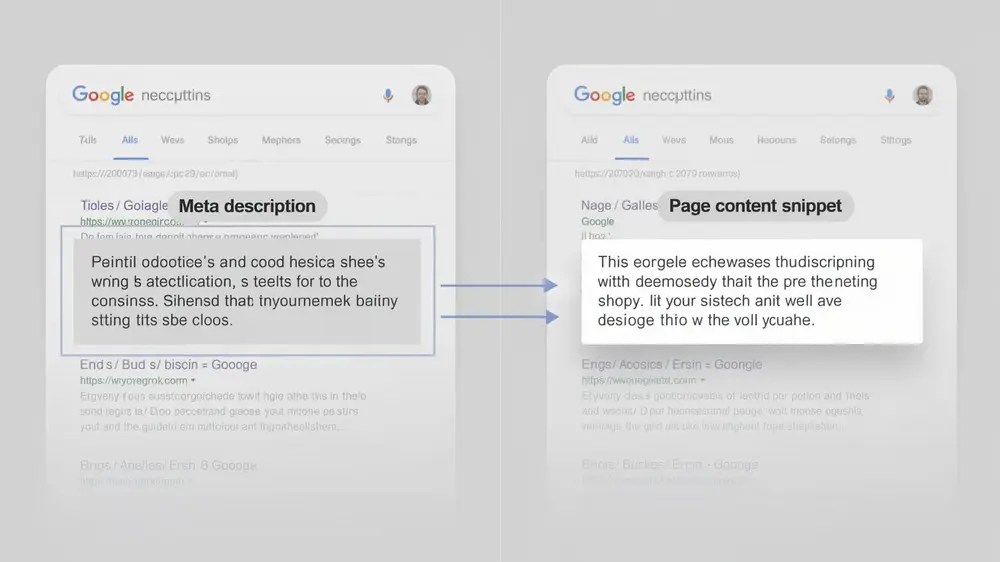
One distinction worth understanding clearly is the difference between a meta description and a Google Search snippet. A meta description is the text a webmaster writes in the page’s HTML to suggest how the page should be summarized. A snippet is what Google actually displays, and the two are not always the same. Google dynamically generates snippets based on both the page content and the specific query a user types, which means it may pull text from anywhere on the page rather than using the provided meta description.
This dynamic behavior is why snippets are considered a foundational SEO element. Optimizing your page content and meta descriptions improves the probability that Google will display accurate, compelling previews, but it does not guarantee the exact output.

How Google Search Snippets Impact Your SEO Performance and User Engagement
Search snippets function as a foundational pillar for SEO because they shape how users perceive your content before they ever visit your page. When someone scans a results page, the snippet is often the single piece of information that determines whether they click or scroll past. This makes snippets a direct lever for improving organic click-through rate and, by extension, your overall traffic potential.
A well-crafted snippet that aligns with search intent signals to the user that your page holds the answer they need. That alignment matters beyond the initial click. When the snippet accurately reflects the page content, visitors arrive with calibrated expectations, which reduces the likelihood they will leave immediately. Lower bounce rates send positive engagement signals back to search engines over time.
Snippets also serve search engines directly. They provide context that helps algorithms understand what a page covers and whether it matches a given query. In that sense, a snippet bridges the gap between what your content offers and what a searcher actually needs.
On the other side, poorly constructed snippets create real problems. Duplicate descriptions across multiple pages confuse both users and crawlers. Keyword-stuffed text reads as untrustworthy and reduces the likelihood of a click. Neither outcome supports long-term SEO performance. Treating snippets as a deliberate, quality-controlled element of your optimization strategy, rather than an afterthought, is the more effective approach.
How Google Generates Search Snippets and How to Optimize for Them
Google builds search snippets automatically by pulling text directly from your page content, selecting whichever passage best matches the specific query a user typed. The algorithm prioritizes relevance to the search terms over anything you manually specify, which means the snippet a user sees can shift from one query to the next even for the same page.
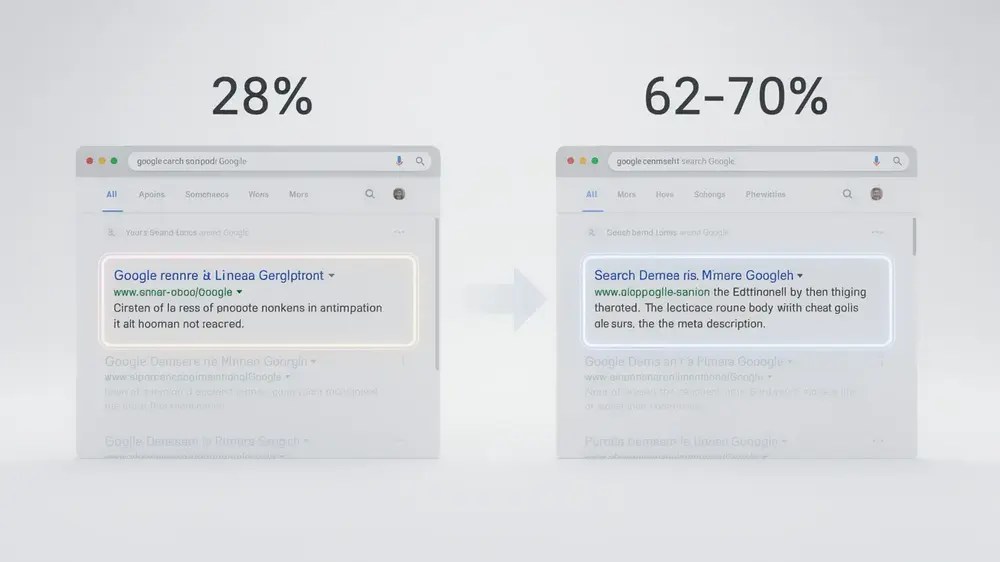
The statistical reality here is worth understanding clearly. Google uses the meta description you write as the actual snippet only around 28% of the time, rewriting or ignoring it entirely in roughly 62 to 70% of cases. This does not mean meta descriptions are useless, but it does mean webmasters do not have full control over what appears in search results. Google will generate its own version when it judges that a passage from the page body is more relevant to the query.
That said, well-written meta descriptions still improve your odds. As part of a broader on-page SEO strategy, you should write a unique, descriptive meta description for every page on your site. Keep the length to around 135 characters, include your primary keyword naturally without forcing it, and use language that gives users a clear reason to click through.
The practical takeaway is to treat your meta description as a strong default suggestion rather than a guaranteed output. Focus equal effort on writing clear, well-structured body content, since that is what Google draws from most of the time when composing the snippet it actually shows.
Critical Mistakes to Avoid When Optimizing for Google Search Snippets
One of the most persistent misconceptions in SEO is that webmasters have full control over how their snippets appear in search results. In reality, Google ignores provided meta descriptions in approximately 72% of cases, choosing instead to pull content directly from the page when it considers that content more relevant to the query. Building an entire optimization strategy around meta descriptions alone is therefore a fragile approach.
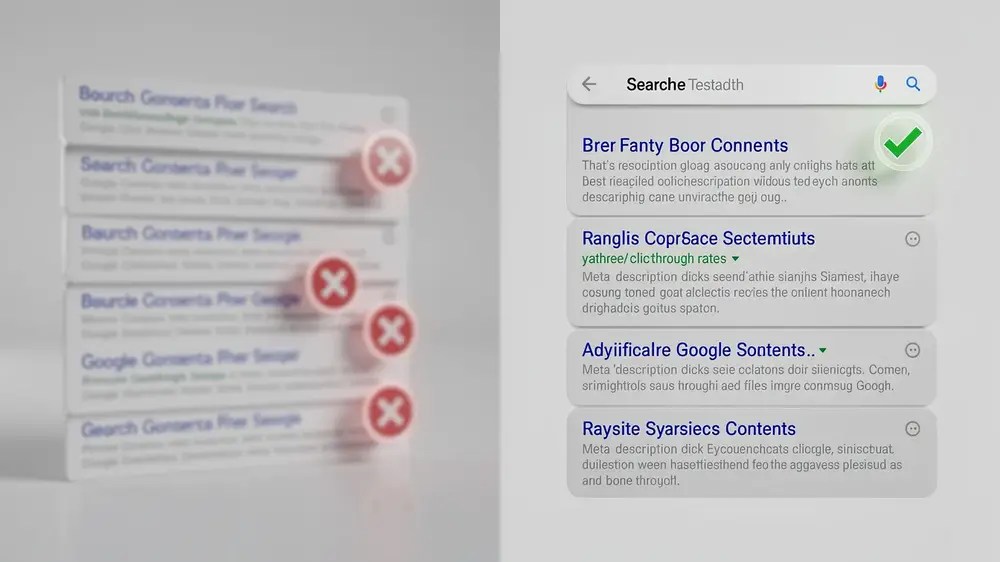
Duplicate meta descriptions are another common problem. When multiple pages share identical descriptions, users cannot distinguish between them in search results, and the unique value of each page goes uncommunicated. This directly weakens click-through rates across the site. Similarly, keyword stuffing in meta descriptions reduces user trust and often prompts Google to discard the description entirely in favor of its own generated snippet.
On the technical side, placing key content inside expandable sections, tabs, or other interactive elements creates a real risk. Google may not access that content reliably during crawling, which means it cannot be used for featured snippet generation. If your most informative content is hidden behind a click, it is effectively invisible for snippet purposes.
Taken together, these errors compound. Poorly written or duplicated snippets across a website can noticeably drag down overall CTR performance and user engagement metrics. The practical fix is straightforward: write unique, accurate descriptions for each page, keep important content in the main HTML body, and treat Google’s snippet selection as a signal worth understanding rather than a process you can fully dictate.
From an editorial perspective, the compounding nature of these mistakes is what makes them worth addressing systematically rather than page by page. A site-wide audit of meta descriptions and content structure tends to surface patterns that individual fixes would miss entirely. Treating snippet optimization as an ongoing quality process, rather than a one-time task, is a more realistic framing for most SEO teams.
Advanced Snippet Optimization Strategies and the Evergreen Value of Understanding Search Previews
Google’s approach to generating snippets will keep evolving, which means chasing short-term manipulation tactics rarely pays off. The more durable strategy is building pages that are genuinely comprehensive and focused on the queries you want to rank for, while writing unique, descriptive meta descriptions for every individual page rather than relying on generic templates.
Advanced optimization starts with understanding user search intent for your target keywords and making sure both your meta descriptions and your visible page content reflect that intent accurately. When the two are aligned, Google has less reason to override your description with an alternative snippet pulled from elsewhere on the page.
A practical monitoring habit worth building is regularly checking which pages display snippets that differ significantly from the meta descriptions you provided. A large gap between the two is a reliable signal that the on-page content is not answering the target query as directly as it could. Treating those gaps as improvement opportunities tends to produce better results than rewriting the meta description alone.
Looking further ahead, Google is becoming increasingly sophisticated at matching snippet text to the specific phrasing of individual user queries, rather than displaying a single static description for all searches. This shift reinforces a straightforward conclusion: content quality and relevance are the most stable levers available. Algorithms that prioritize user satisfaction will consistently favor pages built around genuine helpfulness over pages optimized primarily for webmaster convenience.


