Google updated its Search spam policies on May 15, 2026, clarifying that attempts to manipulate generative AI responses in Google Search can fall under its spam rules. For SEO teams, publishers, affiliate operators, and brands experimenting with AI search visibility, the important point is not that every AI-related optimization is now risky. The real issue is whether the work is designed to help users and search systems understand content accurately, or whether it is built mainly to force a brand, page, or recommendation into an AI-generated answer.
- Google’s May 15, 2026 spam-policy update makes it clearer that manipulation of generative AI responses in Search can be treated as spam.
- AI Overviews, AI Mode, and similar search experiences should not be treated as separate loopholes outside normal Search quality and spam rules.
- Services promising guaranteed placement in AI-generated answers deserve careful review, especially when they rely on listicle manipulation, hidden instructions, or artificial recommendation signals.
- Publishers should audit recommendation pages, affiliate comparison content, and AI visibility experiments with the same care they apply to technical SEO, content quality, and manual-action risk.
- The safer long-term approach is to improve source quality, page accessibility, editorial transparency, internal linking, and user usefulness rather than trying to manipulate answer generation directly.
What Changed and Why It Matters
On May 15, 2026, Google updated its Search spam policies to clarify that spam can include techniques used to manipulate generative AI responses in Google Search. This matters because many SEO teams now treat AI Overviews, AI Mode, and answer engines as a separate visibility channel. In practice, they are connected to the same broader question that has always shaped sustainable SEO: can search systems and users trust the page enough to use it as a source?
From an operator’s perspective, this update should be read less as a sudden new rule and more as a warning against an emerging shortcut. I have seen similar cycles before in e-commerce, affiliate content, local SEO, and multilingual content operations: a new surface appears, tools promise fast visibility, and some sites start building for the system rather than for the user. That may create short-term exposure, but it also creates long-term operational risk.
The distinction is important. Optimizing a page so that its information is clear, accessible, well-structured, and properly sourced is legitimate SEO work. Planting instructions, manufacturing biased recommendations, or building pages mainly to influence AI-generated summaries is different. The first approach improves the website as a business asset. The second approach can weaken trust signals across the site.
This update also fits a broader pattern of Google placing more pressure on usefulness, editorial quality, and transparent content structure. The same direction is visible in MOCOBIN’s Google listicles ranking update analysis, where the practical issue is not whether a page uses a list format, but whether that list genuinely helps the reader make a better decision.
Key Confirmed Details from Google’s Updated Spam Policy
Google’s Search Essentials spam-policies page now makes it clear that techniques used to manipulate generative AI responses in Google Search can be considered spam. That wording is broad by design. It does not give SEO teams a simple checklist of allowed and forbidden tactics for every AI search scenario. Instead, it points back to the intent behind the work: is the content helping users, or is it trying to distort how Google’s AI systems interpret and present information?
This is where SEO teams need to be careful with terminology. Industry discussions often use labels such as recommendation poisoning, biased ranking listicles, and prompt-injection-style instructions. These are useful ways to describe risk patterns, but they should not be treated as the only possible violations. Google is unlikely to list every manipulation method one by one, because the tactics will keep changing.
- Recommendation poisoning: content or signals designed to make an AI system treat a site, product, or brand as a top recommendation without a fair editorial basis.
- Biased ranking listicles: comparison pages created mainly to influence AI-generated answers rather than to help human readers compare options honestly.
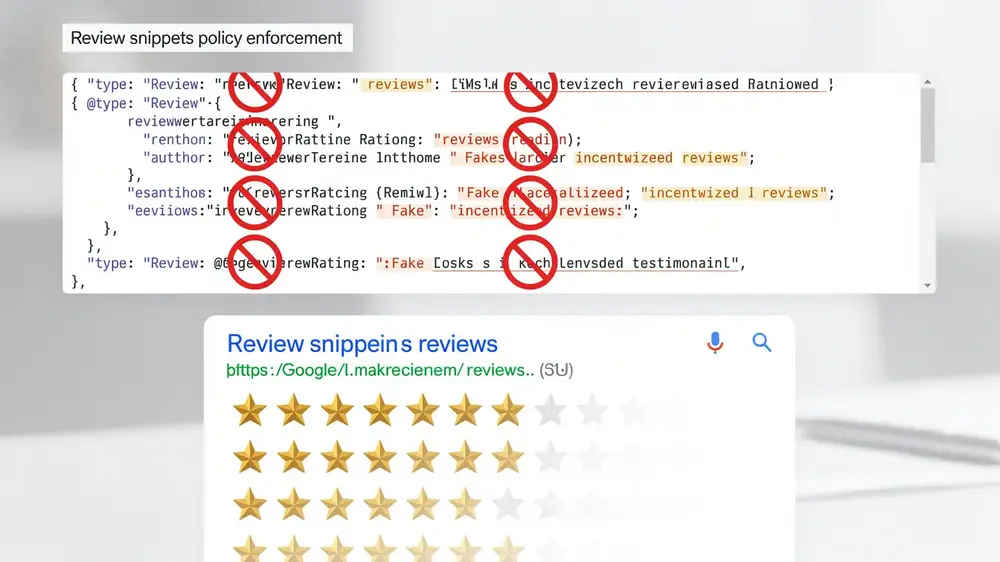
- Prompt-injection patterns: visible or machine-readable instructions embedded in page content to steer how an AI system summarizes, ranks, or recommends the page.
For website operators, the practical risk is easiest to understand through content governance. If a page contains claims, rankings, or recommendations, the team should be able to explain how those claims were selected, what sources support them, and why the order or conclusion is useful for the reader. If the answer is mainly “because it may help us appear in AI answers”, the content needs to be rewritten or removed.
This does not mean AI search optimization should stop. It means the work should move closer to sound SEO operations: clean crawlability, clear page purpose, transparent sourcing, strong internal linking, helpful summaries, and content that matches the user’s real decision stage. MOCOBIN’s AI SEO optimization guidance covers this distinction in more practical terms, especially for teams trying to improve visibility without crossing into manipulation.
Who Is Affected and What the Implications Mean in Practice
The sites most exposed to this update are not necessarily the sites using AI tools. The higher-risk group is made up of sites using AI search visibility as a reason to publish weak, repetitive, or self-serving content at scale. In my own work across Korean, Japanese, and European markets, this pattern often appears in different forms: affiliate comparison pages with unclear ranking logic, translated pages that miss local search intent, product listicles built from thin summaries, or content hubs created mainly to capture search surfaces rather than answer user needs.
SEO professionals experimenting with generative engine optimization should review their methods carefully. There is a meaningful difference between making a page easier for search systems to understand and trying to influence an AI answer through artificial signals. Structured content, schema, clear headings, entity consistency, and accessible URLs can all support discovery when they serve the page’s real purpose. Hidden prompts, forced recommendation language, fabricated authority, and manipulative list ordering create a different risk profile.
Publishers running large libraries of recommendation, review, or comparison content should treat this as a content-quality audit trigger. The key question is not simply “could this page rank?” but “would a user trust this page if they understood how it was produced?” That question becomes even more important in international SEO. A page that appears useful in English may feel unnatural in Japanese, too generic in Korean, or insufficiently transparent for European users who expect clearer source and commercial-disclosure signals.
Understanding how Google search penalties work and how to recover from them is increasingly relevant for teams in these categories, because the consequences of spam-policy violations can range from ranking loss to removal from Search results. Not every traffic drop is a manual action, and not every visibility change is caused by one update, but sites that rely on manipulative AI visibility tactics are adding avoidable risk to their organic channel.
There is also a business reality to consider. AI-generated answers may reduce the need for users to click through to websites in some query types. That does not mean organic traffic has no value, but it changes the calculation. If a tactic creates policy risk while producing limited qualified traffic, it is difficult to justify as a sustainable SEO investment.
From an editorial and operational perspective, I would treat AI answer manipulation the same way I treat other short-term SEO shortcuts. If the tactic cannot be explained to a client, an editor, or a user without sounding evasive, it probably does not belong in a long-term content strategy. The safer work is slower, but it leaves the website stronger: clearer sources, better page structure, more useful comparisons, and content that can survive outside one search feature. — Hyogi Park, MOCOBIN
Practical Response and Next Steps
The first step is a focused content audit, not a full panic rewrite. Start with pages most likely to influence recommendations: listicles, comparison articles, affiliate review pages, “best” pages, product roundups, and pages created for AI search visibility experiments. A documented content inventory audit helps separate pages that deserve improvement from pages that should be consolidated, redirected, or removed.
During the audit, look for content that makes strong claims without sources, ranks products or services without clear criteria, repeats similar recommendations across many pages, or uses language aimed more at AI systems than human readers. Also review whether the page discloses commercial relationships clearly enough for the market it targets. In Japan, readers often respond to careful comparison logic and trust cues. In Korea, search intent can be highly task-oriented and fast-moving. In European markets, transparency, data handling, and disclosure expectations can be more prominent. The same page template may not work equally well across all regions.
For each risky page, decide whether the issue is editorial, structural, or strategic. Editorial issues include weak sourcing, unclear ranking logic, and vague claims. Structural issues include poor internal linking, inaccessible URLs, thin author information, or missing update signals. Strategic issues appear when the page exists only because a tool or vendor suggested that it might help with AI answer visibility.
On the monitoring side, Search Console’s manual actions report remains a primary place to check for direct policy issues. It should not be the only signal. Teams should also watch organic landing-page changes, query shifts, crawl patterns, index coverage, and conversion quality. A traffic decline without a manual action may still indicate that Google has reassessed the usefulness or trustworthiness of a content set.
For publishers evaluating longer-term strategy, it is worth understanding answer engine optimization and AI search visibility before committing to any service that promises AI placement. A useful vendor should be able to explain how their work improves content quality, source clarity, technical accessibility, and user value. If the pitch depends on guaranteed AI placement or hidden influence methods, that is a warning sign.
The practical takeaway is simple: AI search visibility should be treated as an outcome of good content operations, not as a separate trick. Build pages that can be trusted, crawled, understood, localized, and maintained. That work is less exciting than a shortcut, but it is much easier to defend when search systems change.
Signals To Watch After the May 15 Update
The clearest enforcement signals will come from a combination of official documentation, Search Console data, and visible market behavior. It is possible that Google will apply this policy narrowly to obvious manipulation. It is also possible that borderline tactics will become riskier over time as AI search systems and spam detection improve. At this stage, the responsible approach is to avoid overclaiming and monitor evidence carefully.
Monitoring Google Search Console manual action reports should be a priority for any site that has changed content, structured data, or publishing workflows in response to AI-answer visibility. If manual-action language becomes more specific about generative AI responses, AI Overviews, or AI Mode, that will give practitioners a clearer view of how Google is drawing the line between legitimate optimization and manipulation.
Ranking and citation behavior also deserve attention. Strong organic visibility, accessible URLs, clear source signals, and well-structured content can all influence whether a page is usable in AI search experiences. However, correlation should not be confused with a guaranteed method. A page may rank well and still not be cited. A page may be cited without sending meaningful traffic. This is why AI visibility needs to be evaluated alongside business metrics, not separately from them.
Teams using visibility tools can compare AI search appearances, organic rankings, crawl data, and actual user behavior over time. MOCOBIN’s overview of AI visibility tools may be useful for understanding what these tools can and cannot measure. The goal is not to chase every AI mention, but to identify whether important pages are technically accessible, contextually clear, and supported by trustworthy content signals.
Reports from SEO practitioners and publishers will also be useful, but they should be treated as signals rather than proof. In international SEO, market differences can be significant. A pattern seen in English-language SaaS content may not apply directly to Korean e-commerce, Japanese local services, or multilingual B2B websites in Europe. When reviewing community reports, compare them against your own site type, market, language, content model, and monetization structure.
SEO community discussions after the update have broadly treated guaranteed AI-placement services as high risk. These comments should not be treated as official guidance, but they reflect a practical concern many operators share: if a vendor cannot explain how its work improves content quality, source clarity, technical accessibility, or user value, the tactic may create more risk than benefit for long-term domain health.