
A FOX 44 segment featuring Chuck Siegel, CEO of Rule Your Kingdom, introduced two SEO-related terms: Forensic SEO and Search Engineering. The discussion focused on a familiar challenge for local businesses: how to stay visible online when search behavior, platforms, and user expectations continue to change.
However, the segment did not confirm a Google algorithm update, product rollout, or policy change. At this stage, the topic should be treated as SEO commentary rather than verified search news. For business owners and SEO practitioners, the useful response is not to chase new terminology too quickly, but to check whether the ideas behind it can be connected to clear definitions, measurable outcomes, and practical site improvements.
- The FOX 44 segment discussed local business visibility, but it did not confirm a Google algorithm update or platform policy change.
- Forensic SEO and Search Engineering were introduced as strategic terms, but the available source material does not define them in a technical or measurable way.
- Local businesses, SEO consultants, and publishers may find the discussion relevant, but it should not trigger immediate strategy changes without stronger evidence.
- Before using these terms in client work, practitioners should look for definitions, examples, case studies, and measurable results from the original source.
- Established SEO fundamentals, including search intent, technical health, content quality, internal linking, and local visibility signals, remain the safest focus until more details are available.
What Changed and Why It Matters
The most important point is simple: this was not a confirmed search update. The FOX 44 segment featured commentary from Chuck Siegel, CEO of Rule Your Kingdom, in Waco, Texas. The discussion centered on the ongoing difficulty local businesses face when trying to remain visible online as technology and user behavior continue to shift.
That message is still worth paying attention to. In my own work across Korean, Japanese, and European markets, I have seen the same pattern many times. A business often treats SEO as a one-time setup: publish a few pages, add keywords, adjust titles, and wait for traffic. That approach may work for a short period, but it rarely holds up when competitors improve their content, platforms change how results are displayed, or users start searching in more specific ways.
For local businesses in particular, search visibility depends on continuous maintenance. Content has to match real user intent. Pages need to be crawlable and understandable. Local signals need to stay consistent. A site that performed well last year can lose momentum if it is not reviewed against current search behavior and business goals.
No product announcement, rollout timeline, or specific algorithm change was disclosed in the segment. The practical value of the discussion is therefore not in treating it as breaking SEO news. Its value is in reminding business owners that visibility is an operating process, not a one-off marketing task. For readers who need a grounded starting point, reviewing SEO basics can help separate long-term priorities from short-lived industry language.
From an editorial perspective, this kind of commentary can be useful when it brings business owners back to practical questions: Can users find the site? Does the content answer the right intent? Are technical issues blocking performance? Are local pages strong enough to compete in the market they target?
Key Confirmed Details
Chuck Siegel’s discussion introduced two terms: Forensic SEO and Search Engineering. They were presented as important strategies for business discoverability, but neither term received a formal definition, technical specification, or measurable framework in the available source material.
That absence matters. In practical SEO work, a term only becomes useful when it helps a team diagnose a problem, choose an action, or measure an outcome. If a term cannot explain what to check, what to change, and how to evaluate progress, it remains a label rather than a reliable method.
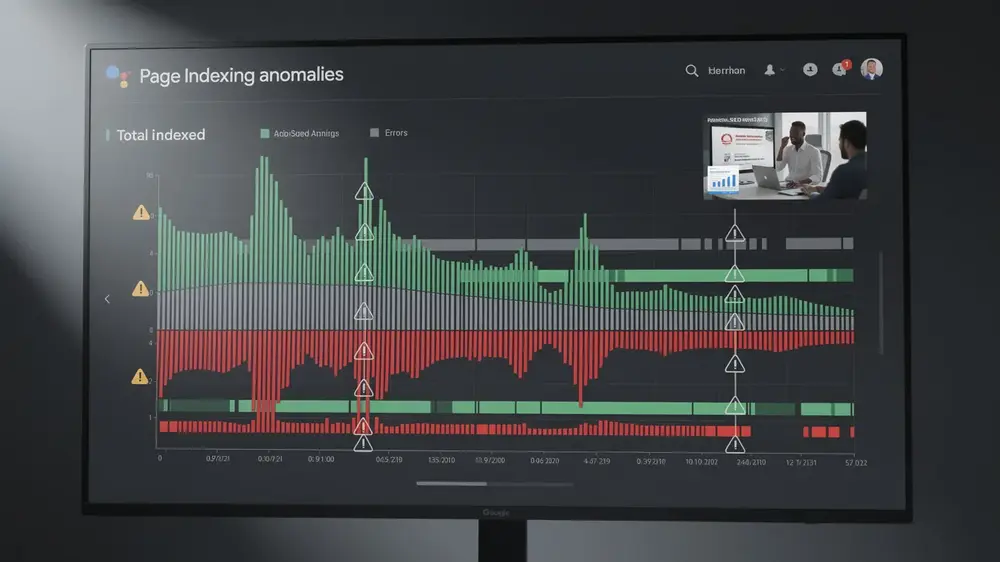
Forensic SEO may eventually prove useful if it refers to a structured investigation of traffic drops, indexing problems, technical errors, content decay, backlink risks, or local visibility issues. Search Engineering may also become meaningful if it describes a disciplined approach to building search-friendly systems across site structure, content operations, analytics, and localization. But at this stage, those interpretations are not confirmed by the segment itself.
Many of the issues implied by this kind of diagnostic language already sit within technical SEO fundamentals, including crawlability, indexability, canonical handling, internal linking, structured data, site performance, and error discovery. Until the new terms are clearly defined, it is safer to compare them with established SEO practice rather than present them as separate frameworks.
The conversation stayed at a strategic level. It did not identify specific ranking factors, platform requirements, search features, or implementation steps. For site owners, this means the practical takeaway is limited for now. The discussion can be used as a reminder to review visibility, but not as a reason to rewrite an SEO roadmap.
When a new SEO term appears without a working definition, I do not reject it immediately, but I do not apply it to strategy either. First, I look for the problem it solves, the evidence behind it, and whether it improves decisions better than existing SEO methods. Without that, the term belongs in observation, not execution. (Hyogi Park, MOCOBIN)
MOCOBIN Editorial View: How To Treat Undefined SEO Terms
In SEO consulting, unclear terminology can create more confusion than value. This is especially true when a business owner is already under pressure because traffic, inquiries, or sales have declined. A new phrase can sound advanced, but if it does not lead to a clearer diagnosis or a better decision, it may only add another layer of uncertainty.
My approach is to separate three things: confirmed facts, experience-based interpretation, and general advice. The confirmed fact here is that the segment introduced Forensic SEO and Search Engineering without detailed definitions in the available material. The experience-based interpretation is that these terms may be connected to diagnostic SEO and broader search systems thinking. The general advice is to keep improving site fundamentals while waiting for clearer evidence.
This distinction is important for international SEO as well. In Korea, Japan, and European markets, businesses often face different search habits, platform expectations, language structures, and trust signals. A phrase that sounds useful in one market may not translate directly into another. For example, Japanese users may expect more detailed service explanations before making contact, while Korean users may compare several sources quickly before trusting a brand. European sites may also need to balance SEO with privacy, localization, and multilingual structure.
That is why new SEO concepts should be tested against the market, the industry, and the actual user journey. A local dental clinic, a wedding service, an e-commerce store, and a B2B consulting site do not need the same SEO response simply because a new term appears in a media segment.
Before using either term in a client proposal, internal audit, or content plan, marketers should ask three questions:
- What specific SEO problem does this term help identify?
- What data or evidence is used to support the diagnosis?
- How is the recommended action different from existing technical SEO, content auditing, local SEO, or search intent analysis?
Who Is Affected and What This Means in Practice
Three groups are most relevant to this discussion: local businesses competing for organic visibility, SEO consultants working on audits and performance diagnosis, and publishers whose traffic depends on stable search performance. Each group can take something from the discussion, but none should treat it as a reason for immediate tactical change.
Local businesses are the clearest audience. Many small and mid-sized businesses rely on search visibility for phone calls, store visits, bookings, and lead generation. When search behavior changes, they often feel the impact before they understand the cause. For these businesses, the better response is not to adopt new terminology, but to check whether their pages still match how customers search today. Search intent remains one of the most practical starting points because it connects keyword research with the actual reason behind a user’s query.
SEO consultants and digital agencies may find the terminology worth monitoring, especially if they work on traffic recovery, technical audits, or local search diagnostics. However, the terms should not be presented to clients as established methodology unless the original source provides clearer definitions and proof of use. In client communication, clarity matters more than impressive vocabulary.
Publishers and content teams face a broader version of the same challenge. Search visibility is affected by site structure, topical depth, content quality, internal links, technical health, and the speed at which outdated pages are reviewed. Publishers reviewing visibility changes should look at actual site data before connecting a ranking movement to a new SEO concept. For example, the Google Search Console Links report can help teams review internal and external link patterns instead of relying on assumptions.
- Local businesses: use the discussion as a reminder to review visibility, not as a reason to rebuild strategy immediately.
- SEO consultants: track the terminology, but wait for definitions, examples, and measurable methods before using it in client work.
- Publishers: focus on site data, content structure, and long-term quality signals rather than reacting to a single media segment.
Practical Response and Next Steps
The safest practical response is to treat the segment as educational commentary. No immediate SEO overhaul is warranted based on the available information. A business should not change its content strategy, technical roadmap, or agency brief simply because new terms were introduced without clear definitions.
Instead, site owners and marketers should use this moment to review the foundations that consistently affect search visibility. In many SEO projects, the biggest gains do not come from reacting to industry language. They come from fixing weak site architecture, improving page intent, updating thin or outdated content, clarifying internal links, and making sure important pages can be crawled and indexed properly.
For local businesses, this means checking whether service pages explain what the business does, where it operates, who it helps, and why a user should trust it. For multilingual or international sites, it also means checking whether the content feels natural in the target market. Direct translation is rarely enough. The page must reflect local vocabulary, search habits, comparison behavior, and decision-making style.
A practical review can begin with the following checks:
- Confirm whether the source reports a real platform change or only presents expert commentary.
- Compare any new SEO claim with Google Search Central documentation before changing strategy.
- Look for definitions, examples, case studies, and measurable outcomes.
- Review crawlability, indexing, internal links, page intent, and content freshness before assuming an external cause.
- Avoid using undefined terminology in client-facing recommendations until the method is clear.
For publishers, the more sustainable response is to strengthen topical depth and internal structure instead of reacting to every new SEO phrase. A clear understanding of topical authority can help teams decide which subjects deserve deeper coverage and how supporting articles should connect to broader business goals.
For local businesses specifically, the guidance is straightforward. Keep investing in discoverability, content quality, and technical SEO hygiene, but avoid connecting those efforts to an unconfirmed rollout or announcement. A well-structured content plan, supported by regular review and realistic performance measurement, will usually be more useful than adopting terminology that has not yet been explained.
Signals To Watch
The most useful next step is to wait for a full video release or detailed follow-up from Rule Your Kingdom. That material would need to clarify whether Forensic SEO and Search Engineering refer to specific methods, diagnostic workflows, local SEO tactics, AI search considerations, or broader strategic language.
Follow-up content would carry more weight if it includes practical examples. For instance, a case study showing how a local business identified a visibility problem, diagnosed the cause, applied a specific method, and measured the result would make the terminology more useful. Without that kind of detail, the terms remain difficult to apply in professional SEO work.
It is also worth monitoring whether reputable SEO publications, Google Search Central, or experienced practitioners begin discussing the terms with clear definitions. Wider mention alone is not enough. The important question is whether the terms help practitioners make better decisions.
If the discussion later moves toward diagnostic SEO workflows, tools used for crawl-based audits, such as Screaming Frog SEO Spider, may provide a more practical comparison point than undefined terminology alone. A crawl can reveal broken links, redirect chains, metadata issues, thin pages, duplicate elements, and indexability problems. Those findings are easier to act on than a broad strategic phrase.
At this stage, the discussion remains conditional. The value of Forensic SEO and Search Engineering depends on whether future content explains what they mean, how they are applied, and how results are measured. Until then, SEO teams should continue prioritizing verifiable site improvements over unclear labels.
Community discussions can be useful for understanding how practitioners react to new SEO terminology, but they should not be treated as authoritative evidence on their own. In this case, the stronger professional response is to rely on primary sources, clear definitions, documented methods, and measurable results before changing client strategies or internal workflows.