Google’s March 2026 core update, which ran from 27/03/2026 to 08/04/2026, has reshuffled ranking priorities in ways that are already visible across ecommerce, publishing, and affiliate verticals. EEAT signals and content quality are now the dominant factors, and sites built on volume-based AI content production or low-relevance link building are absorbing the clearest losses.
- The March 2026 core update ran from 27/03/2026 to 08/04/2026 and confirmed EEAT as the leading ranking criteria, with human-generated content outperforming AI-generated material in competitive verticals.
- Backlink evaluation now weights contextual relevance over volume, making large quantities of loosely related links less effective and potentially harmful.
- Ecommerce sites, publishers, and affiliate operations with thin authorship or AI-heavy content are among the most exposed to ranking drops from this update.
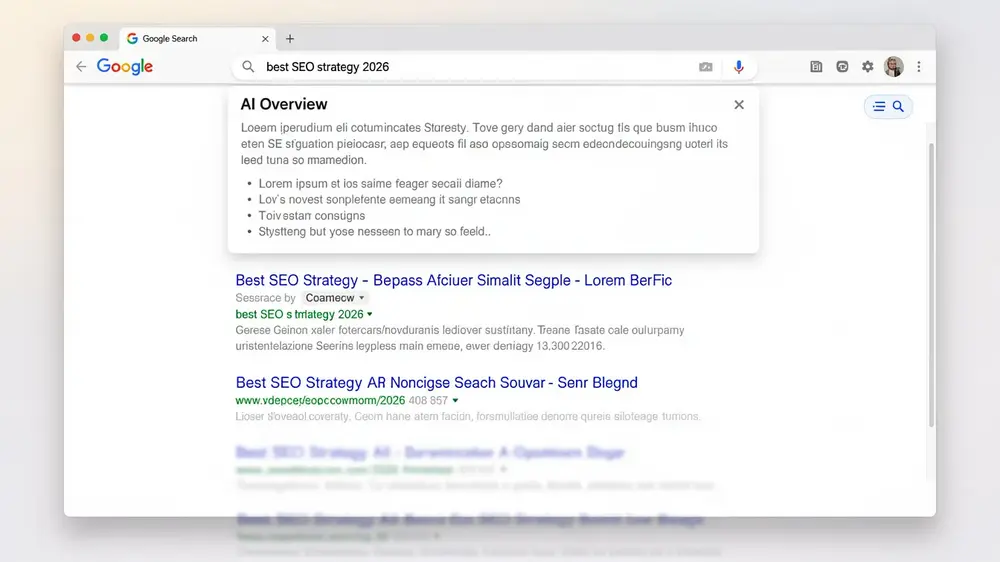
- AI Overviews and zero-click features are reducing click-through rates on informational queries, raising the importance of precise search intent alignment for traffic that converts.
- Ranking shifts that persist three to four weeks after the update are more likely to reflect genuine quality signals than temporary volatility, making sustained monitoring a practical priority.
What Changed and Why It Matters
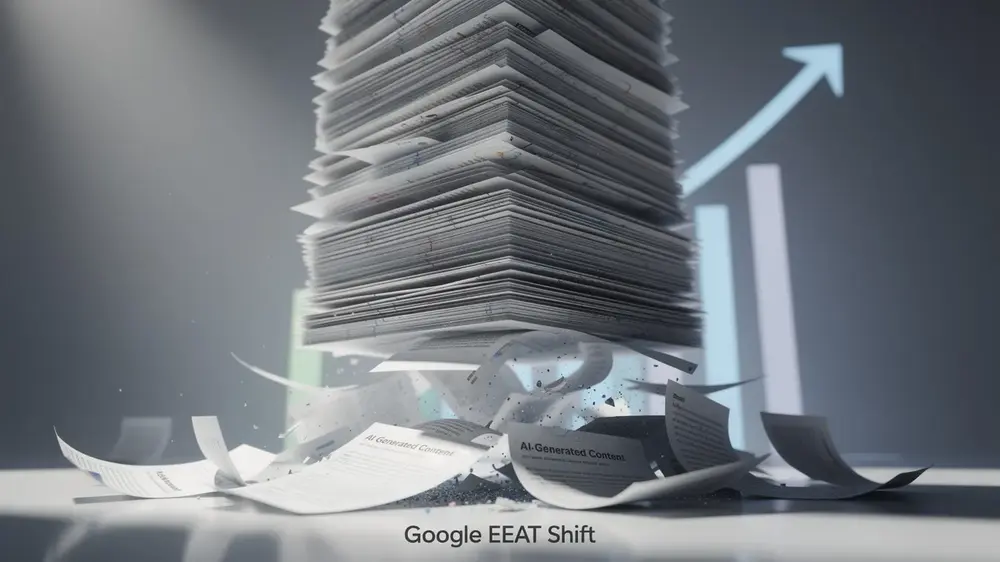
Google’s March 2026 core update, which rolled out between 27/03/2026 and 08/04/2026, marked a significant shift in how the search engine evaluates and ranks content. Experience, Expertise, Authoritativeness, and Trustworthiness (EEAT) moved firmly to the top of the ranking criteria, and human-generated content is now measurably outperforming AI-generated material across competitive verticals. For anyone managing organic search performance, this is not a minor adjustment.
The update also tightened how backlinks are assessed. Quantity alone no longer carries the weight it once did. Google is now placing greater emphasis on the context and relevance of linking sources, which means low-quality link-building tactics are likely to produce diminishing returns or active penalties. Alongside this, the update reinforced the importance of content that genuinely satisfies user intent, applying this standard across all site types rather than targeting specific niches.
Keyword stuffing as a primary strategy is now a liability rather than a shortcut. the full breakdown of the March 2026 core update outlines how data-informed content planning and clear demonstration of human expertise are the practical responses to these changes. Businesses that rely on volume-based content production without strong editorial oversight face real visibility risks. The broader digital transformation context adds further pressure, making analytics-driven marketing approaches less optional and more foundational for maintaining search presence.
Key Confirmed Details of the March 2026 Core Update
The March 2026 core update ran from 27/03/2026 through 08/04/2026, with Google confirming its intent through the Search Status Dashboard. The stated goal was to surface relevant and satisfying content from a wider variety of site types, which aligns with the broader direction Google has signaled over recent update cycles.
EEAT factors (Experience, Expertise, Authoritativeness, and Trustworthiness) now appear to dominate ranking decisions more heavily than before. Post-update performance data from the SEO community suggests that human-generated content is showing measurable advantages over AI-generated alternatives, though the exact mechanisms Google uses to distinguish between them remain undisclosed.
Backlink evaluation has also shifted in a notable direction. Quality assessments now appear to weigh contextual relevance more heavily than raw volume, meaning a smaller set of topically aligned links may carry more weight than a large number of loosely related ones. Tools that surface contextual link data, such as those covered in this guide to using Ahrefs for SEO analysis, become more useful in this environment.
One important caveat: no official Google statement directly connects any data-driven marketing shift to this update. The current industry understanding of these ranking pattern changes derives from observed data and SEO community analysis, not from confirmed Google documentation. Treating these observations as directional signals rather than confirmed rules is the more accurate framing.
The gap between what Google confirms and what the SEO community observes has always been wide, and this update is no exception. Acting on community-derived signals is reasonable, but building strategy on them as if they were documented rules is where many site operators overcommit. Calibrated caution tends to age better than confident assumptions in this space. (Hyogi Park, MOCOBIN)
Who Is Affected and What the Main Implications Are
The current wave of Google algorithm changes is not hitting all sites equally. Ecommerce operations and publishers that depend heavily on organic traffic are among the most exposed, particularly when their content relies on AI generation without strong EEAT signals. Sites with thin authorship, generic product descriptions, or no demonstrable subject-matter expertise are seeing the sharpest ranking drops.
Affiliate sites and large content agencies face a structural challenge. Volume-based AI content production, once a viable growth tactic, is now a liability in many verticals. The shift required is toward data-backed, expertise-focused content that can withstand scrutiny from both automated quality assessments and human reviewers.
Marketers in competitive niches, including local SEO and non-English markets, face a separate but related pressure. AI-generated overviews are reducing click-through rates on informational queries, which means aligning content with precise search intent has become more critical than ever for capturing the traffic that does convert.
Businesses that have not yet built reliable analytics infrastructure are at a further disadvantage. Without the ability to track performance at a granular level, it is difficult to identify which content is underperforming and why. The sites most likely to stabilize rankings are those that can demonstrate measurable expertise, maintain consistent content quality, and adapt their strategies as search behavior continues to shift toward zero-click environments.
Practical Response and Next Steps
With search behavior shifting rapidly, SEO professionals need a structured response rather than reactive fixes. The priority areas span content credibility, technical signals, and link quality, all of which compound over time if left unaddressed.
Strengthen EEAT and Content Signals
Start with a comprehensive EEAT audit. Revise title tags to include personal pronouns where appropriate, verify that content clusters align with semantic intent, and document author credentials visibly on the page. These adjustments signal genuine human expertise to both crawlers and readers. Alongside this, reduce dependence on AI-generated content, which carries increasing ranking risk as Google refines its quality assessments.
Monitor Performance and Build Authority
Deploy Google Search Console and Ahrefs for real-time performance monitoring, tracking keyword movement and assessing backlink quality on a regular basis. For multimodal content, implement VideoObject schema, sharpen image alt-text, and reinforce local SEO elements to support personalized user experiences. guest posting as an SEO strategy remains a reliable method for building high-quality contextual backlinks, particularly when combined with influencer collaborations that generate genuine editorial mentions.
Finally, test structured data for AI overview eligibility and keep a close watch on zero-click features such as People Also Ask sections. Visibility in these placements is becoming as strategically important as traditional ranking positions.
Signals To Watch
With the March 2026 core update still settling, the immediate priority is distinguishing persistent ranking shifts from temporary volatility. Using Google Search Console alongside Google Analytics for SEO monitoring gives you a clearer picture of which traffic changes are stabilizing and which pages may need substantive attention. Drops that persist beyond three to four weeks after an update typically reflect genuine quality signals rather than algorithmic noise.
Beyond stabilization, there are several forward-looking signals worth tracking closely:
- Subsequent core updates: Watch for Google announcements targeting local relevance improvements and clickbait reduction, both of which have been flagged as ongoing focus areas.
- SERP feature shifts: AI Overviews, zero-click result expansion, and People Also Ask prominence are all changing how organic clicks distribute across positions.
- AI SEO tool adoption: Rising use of AI-generated content at scale is prompting stricter detection patterns, and understanding how Google responds will matter for content strategy.
- Community signals: SEO forums and professional communities remain useful early-warning systems for EEAT enforcement patterns and emerging ranking factor discussions.
None of these signals operate in isolation. Tracking them together, rather than reacting to each individually, gives site owners and marketers a more reliable basis for decisions heading into the next competitive cycle.